There has been an interesting tactical tweak to Southend United’s system that I’ve noticed recently: our inverted wing-backs.
Against Boreham Wood at Roots Hall a couple of weeks ago, the inversion of Jack Bridge played a huge role in us scoring our third goal in the 4-2 victory, and this tactic was again evident at Fylde on Saturday.
Against Fylde, Southend built play from defence in our usual 3-4-3 ‘diamond’ shape. Our single #6, Cav Miley, sat ahead of our back-three of Harry Taylor, Ollie Kensdale and Nathan Ralph; Oli Coker and James Morton were the two #8’s; Gus Scott-Morriss and Jack Bridge were the wing-backs; and Danny Waldron partnered Harry Cardwell up-front.
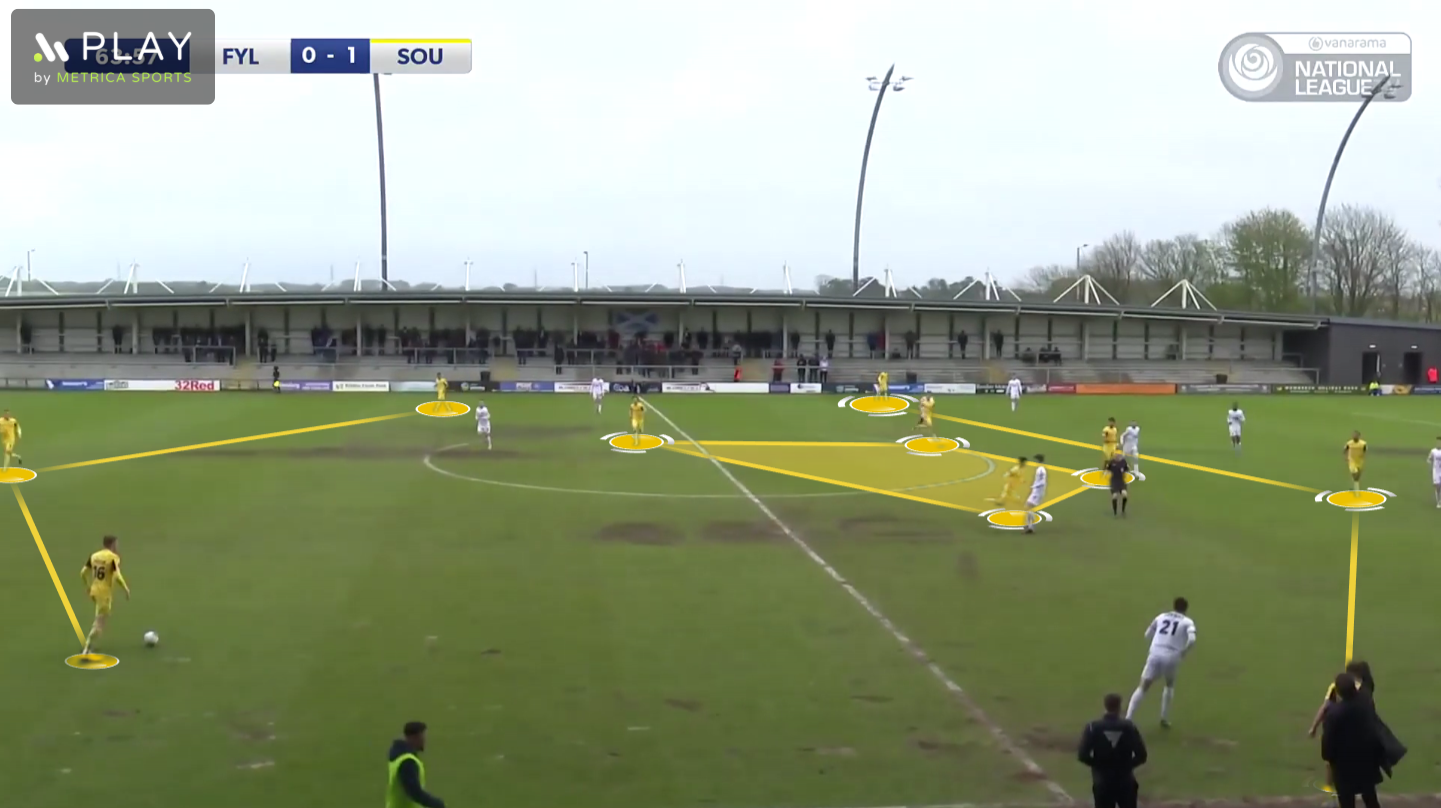
With Fylde sat in their low/mid-block, we were able to build play in the first-phase higher up the pitch, rather than on the edge of our penalty area. Additionally, there was a lot of space when Fylde were passive in the press. Morton would often drop deeper from his left-sided #8 position into this space, which acted as the catalyst for a couple of positional rotations.
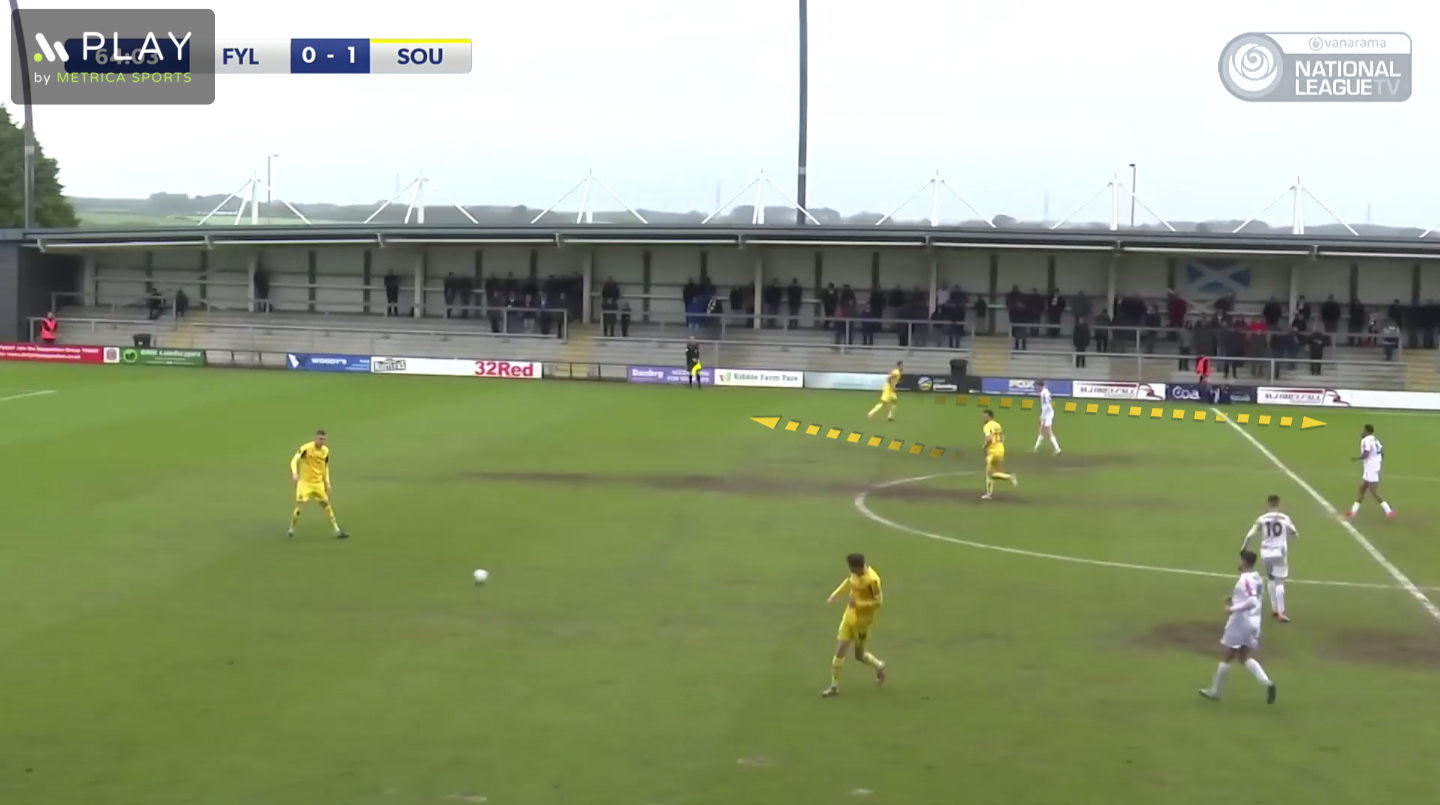
As soon as Morton started to drop deeper, Ralph began to push forwards on the left-side. Despite Ralph moving away from the first line of attack, we still maintained our usual ‘3-1 shape’ in the first-phase of build-up, with Morton now acting as the situational left-sided centre-back, and Miley ahead of the ‘back-three’.
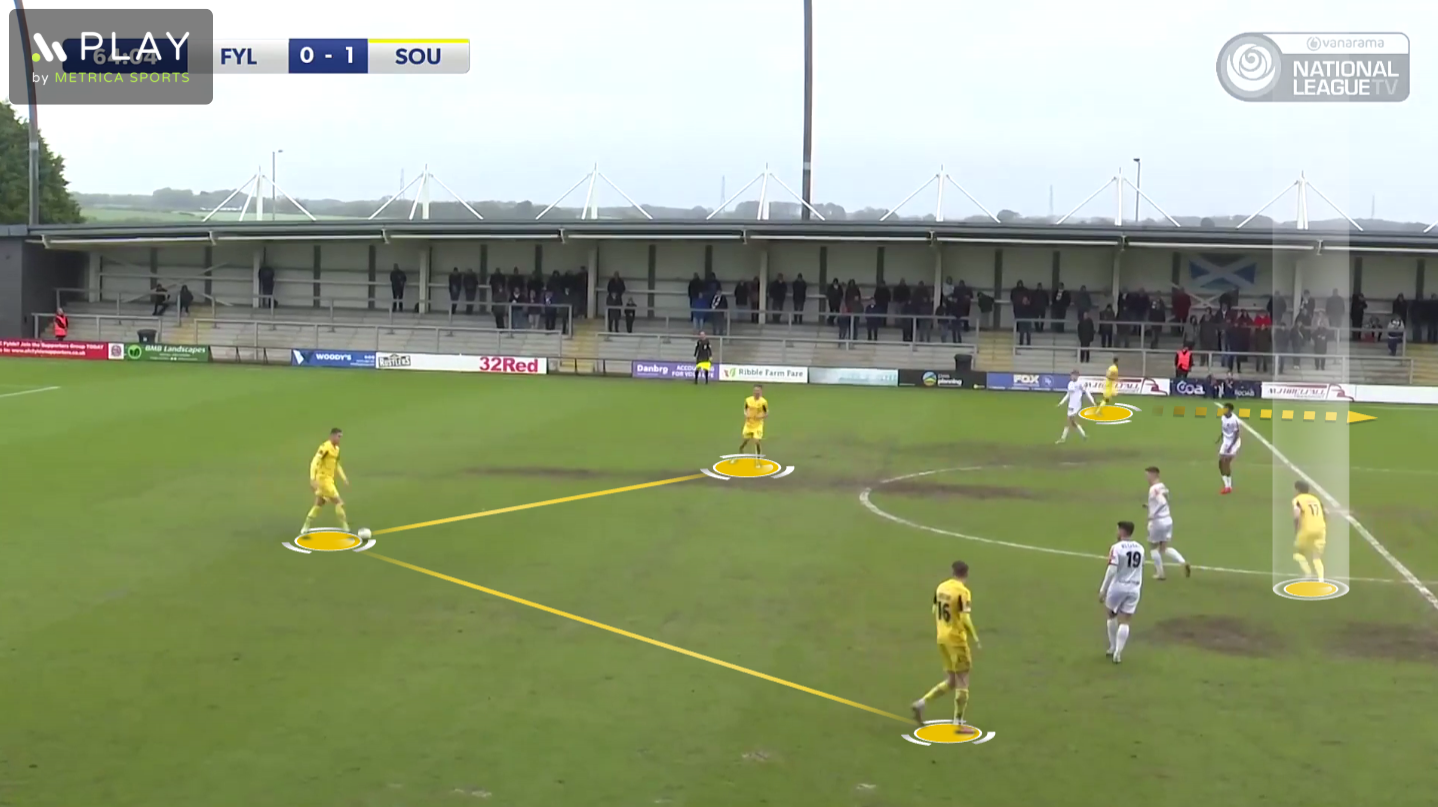
The second positional rotation that occurred was in the second-phase: once we had progressed the ball into Miley, and he was looking for forward options. With Ralph now pushed forwards on the left-side, it allowed Bridge to invert into the left half-space.
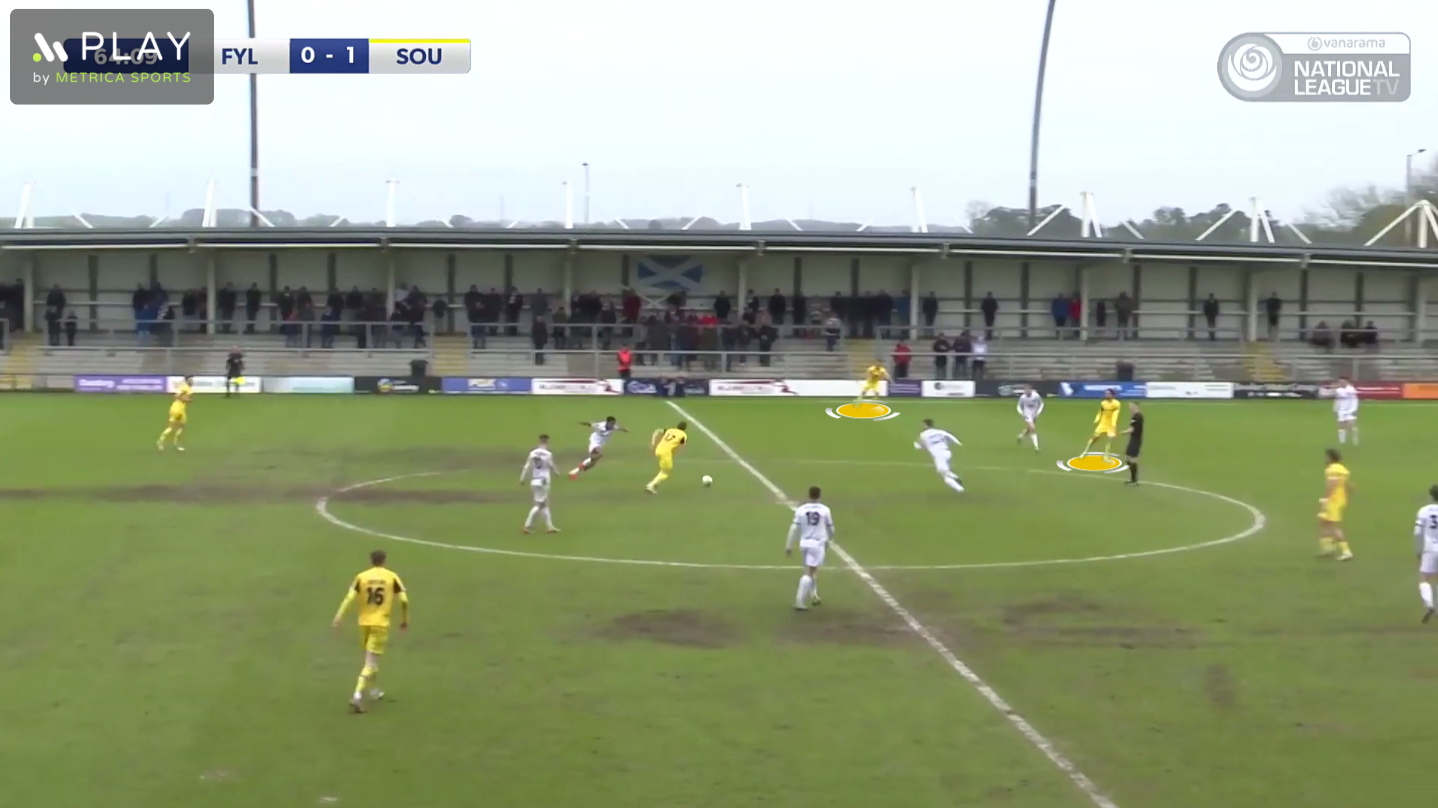
On this occasion we moved the ball out to Ralph, which dragged Fylde’s right-back out of position to press him. This created a large gap between Fylde’s right-back and right-sided centre-back in their back-four, and Bridge made a forwards run through this space, to get on the end of a through pass from Ralph.
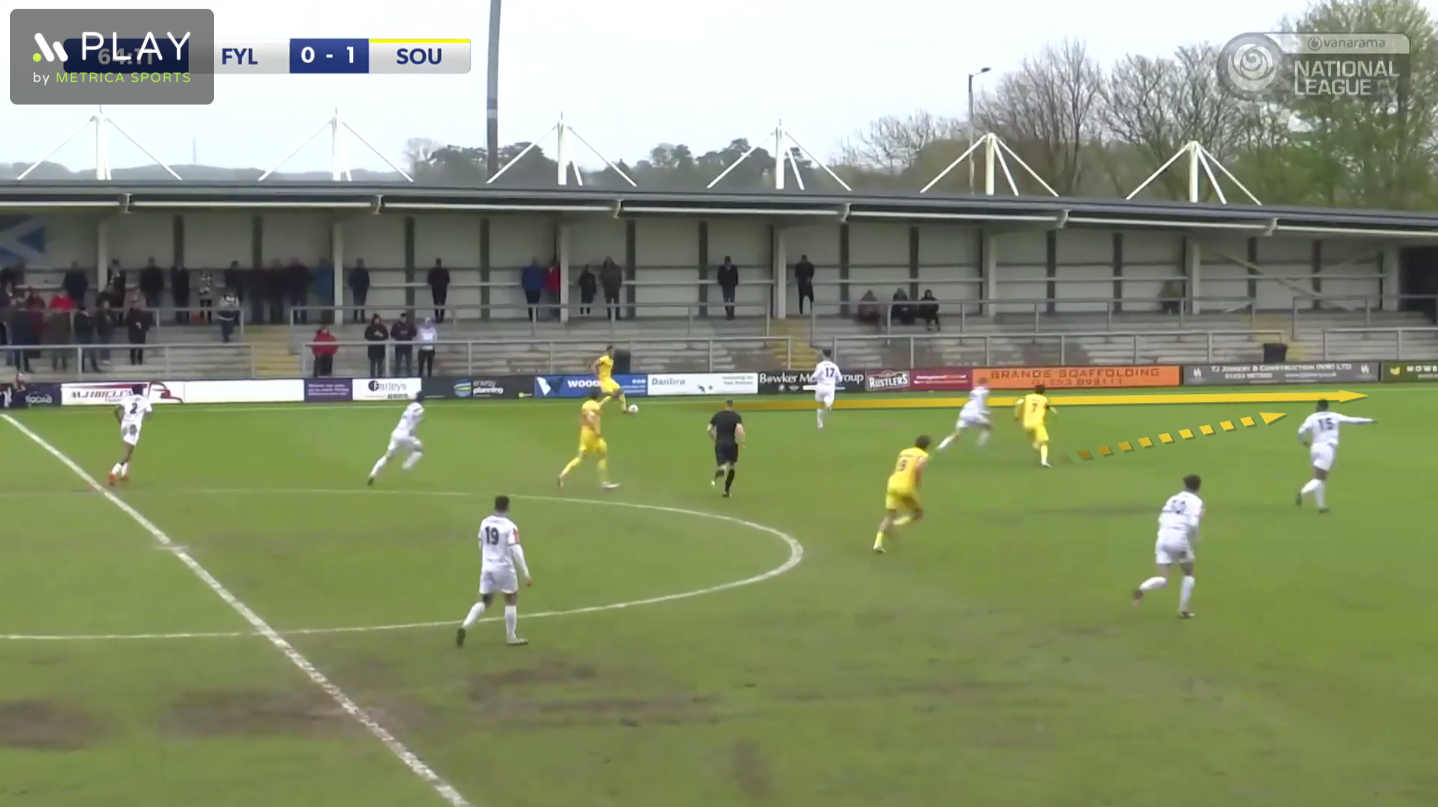
Fylde’s right-winger did well to track back to stay with Bridge, but it still left Bridge in a 1v1 situation on the edge of the penalty area. This is the position where Bridge is at his best. He is one of the most dangerous 1v1 players in the division from the left-side, and this was a very favourable situation for Southend to find themselves in. Especially so, when we consider that the player that Bridge was up against was a right-winger rather than a recognised defender, and therefore may not be as strong in these scenarios.
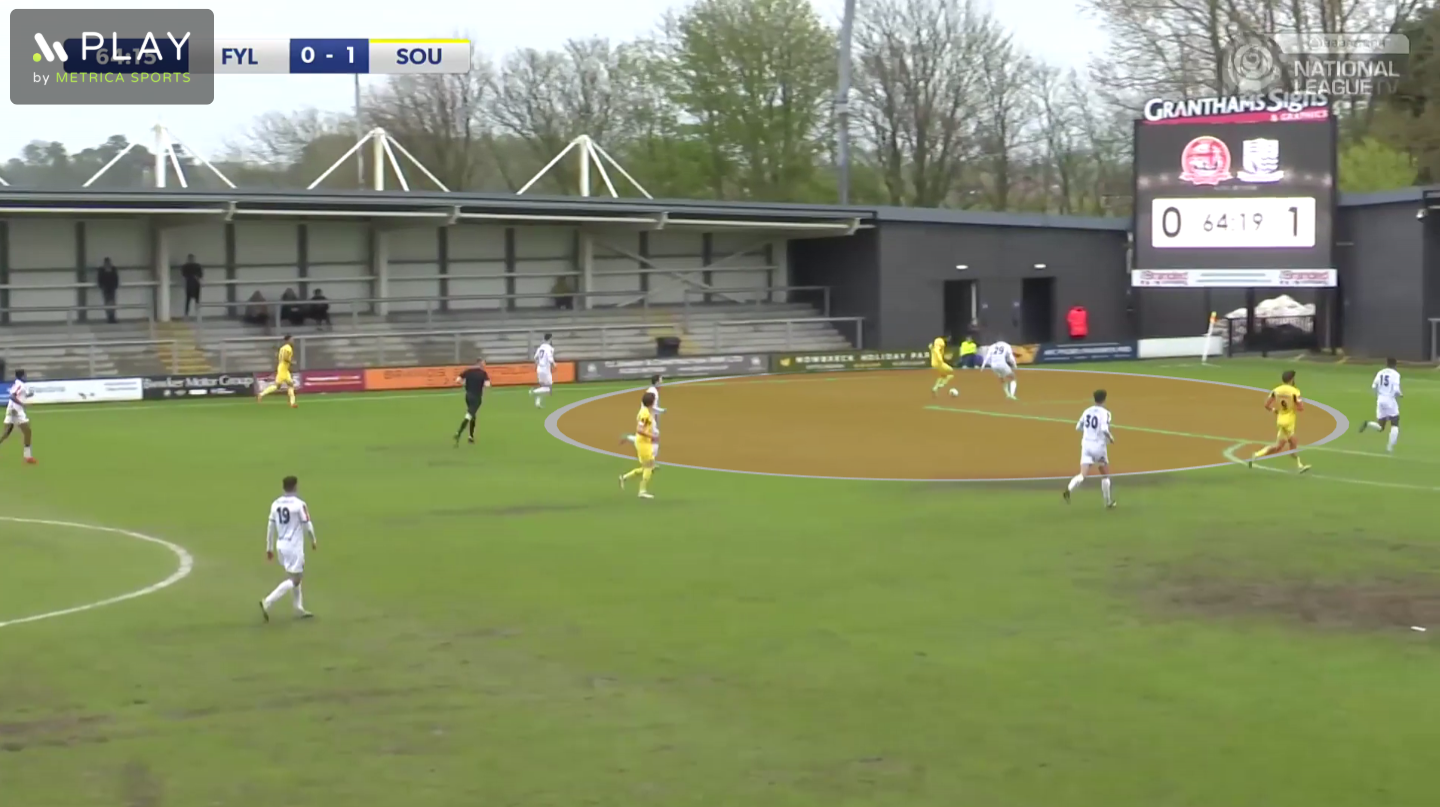
In this particular example, Bridge beat his marker and crossed the ball into the penalty area, but it came to nothing. However, this move did show the benefits that inverting our wing-backs can potentially have on moving opposing players around the pitch, creating space, and ball progression.
When we invert from our left-side, it also suits the profiles we have there incredibly well.

Morton is very comfortable receiving the ball in deeper areas – more so than Wes Fonguck, who is our other option in the left-sided #8 role. Ralph is comfortable at both receiving the ball in the first line or higher up – helped by the fact that he had been a left-back for much of his career, rather than a centre-back. Although Bridge’s favoured area to receive the ball is high and wide on the left-side, he also has the technical ability to receive centrally, where the space is typically more congested. This also gives him the freedom to influence our attack either centrally or from the left.
If we inverted from our right-side, it wouldn’t suit the profiles that we have there as well as it does from our left.
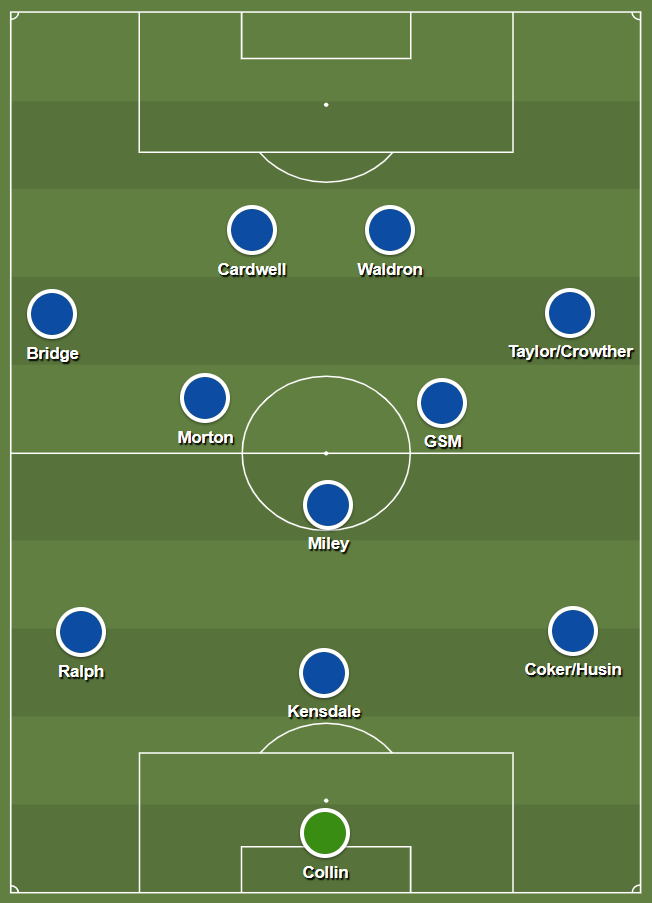
Coker or Noor Husin (our right-sided #8 options) could drop into the first line because they can play a high pass volume, but then we’d miss their ability in the final-third if we progressed the ball forwards before they could join the attack. Taylor or Adam Crowther (our right-sided centre-back options) aren’t the type of players you’d want holding the width high up on our right-side, at all. Although Scott-Morriss possibly could invert from our right-side, he isn’t as technically secure as Bridge, and it may lead to more turnovers of possession. Additionally, as Taylor or Crowther would be high up the pitch, they wouldn’t be able to help out in the event of these turnovers of possession, as they’d likely be too far away.
 Shrimper Stats
You must be logged in to post a comment.