Phil Parkinson’s Altrincham beat title-hopefuls York City 3-0 on Tuesday night, and they demonstrated the perfect way to beat Adam Hinshelwood’s side.
York built play in a 3-2-5 shape; with Felix inverting from left-back into the pivot next to Hunt. Further forward, Pearce and Aguiar were in the half-spaces in-between the front-three.
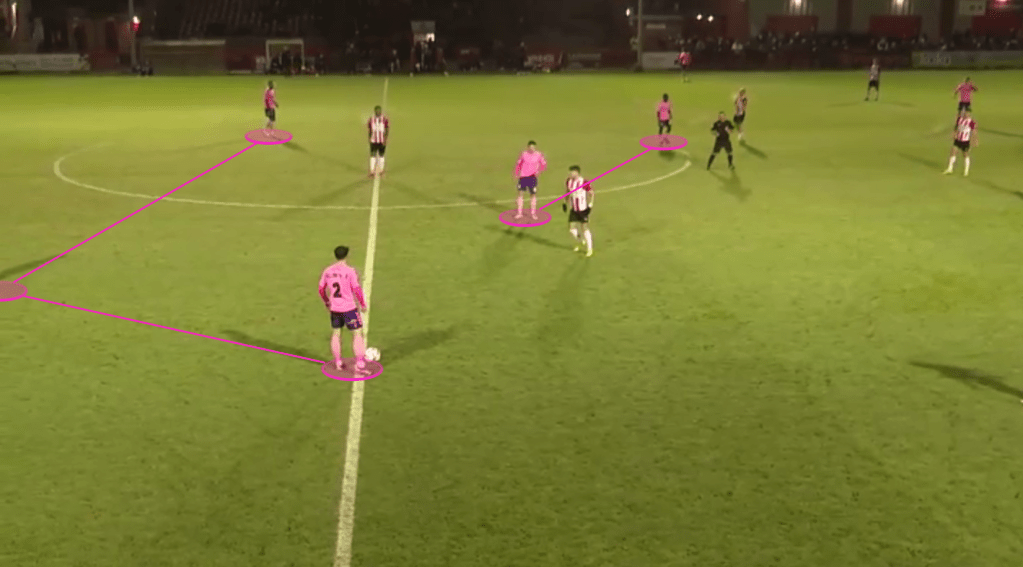
To counter, Altrincham sat in a compact mid-block but, when they did press high, they did so with intensity and aggression. This rushed York into playing long passes, and this is where their problems centred…
Thomas led the line as York’s #9 but he was no match, physically, for Altrincham’s centre-backs when challenging for aerial duels. Then, in the midfield, the combination of Pearce, Aguiar and Hunt lacked the collective physicality to reliably win duels, and Altrincham could regain possession and initiate attacks of their own.
Altrincham, on the other hand, built in a 4-2-4 shape; and York pressed in man-to-man fashion right the way across the pitch. Pearce partnered Thomas in pressing from the front, and the rest of their block matched up. Consequently, this forced Altrincham into regularly ‘going long’ from defence which made it difficult for them to build attacks safely.
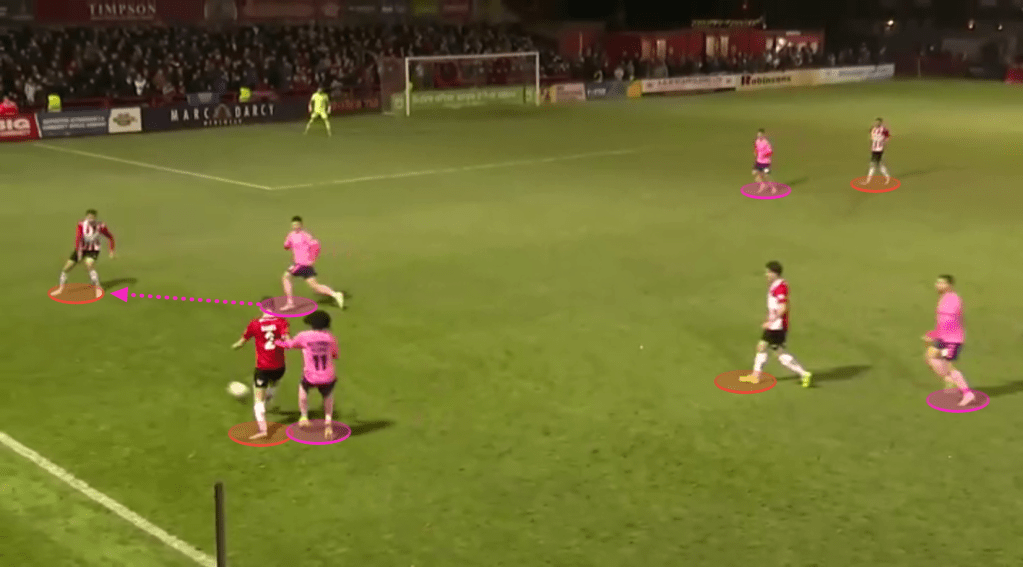
This is the goal for a possession-based side like Hinshelwood’s York. They want to control the match with & without the ball, give their opponents as little time as possible in-possession, and defend the transitions before initiating another attack. But this only works if you can win your duels with consistency, and York lacked the collective physicality across their XI to do so.
Despite this, York still managed to have almost 67% of the possession, and could pin Altrincham back with regularity. When they did so, Altrincham kept their shape and limited them to just 0.81 expected goals (xG).
However, when these attacks broke down, York’s lack of physicality was exposed again. Felix, a natural full-back, often partnered Hunt in the midfield behind the front-five.
Hinshelwood got his team selection wrong. He admitted that himself post-match. They weren’t strong enough when challenging for duels, they weren’t adequately set-up to defend the transitions well enough versus perhaps the most effective side in the division in this phase, and his pressing approach is built on creating 1v1 battles all across the pitch. Top physicality is required to be effective in all of these moments with reliability.
This collective lack of physicality throughout the XI may have worked against a different opponent; but not against a side with as much physicality as Altrincham – not just in terms of their duel-winning ability, but also their tremendous threat in transition.
This was just York’s third National League loss of the season. Hinshelwood will learn from his mistakes and his side will still be in the title race come the end of the season. But the evening was all about Altrincham. Their physicality was too much for York, and their transitional threat and difference-makers in the final-third won them the match convincingly.
 Shrimper Stats