Adam Hinshelwood’s York City beat Jim McNulty’s Rochdale 4-0 at Spotland on Tuesday night.
Below, I’ll explain why Rochdale’s insistence on ‘playing out’ and York’s press contributed to the away side controlling the majority of the possession and picking up the three points.
The home side built play in their usual 3-2-5 shape. Rochdale’s goalkeeper, Sam Waller, was behind a back-three of Jack Kingdon, Liam Hogan and Sam Beckwith. Ryan East and Harvey Gilmour were in the pivot, with their wing-backs, Tobi Adebayo-Rowling and Jili Buyabu, pushed high & wide, either side of their front-three, consisting of Connor McBride, Kairo Mitchell and Leon Ayinde.
York, who were using a 4-1-4-1 shape, pressed Rochdale high up the pitch in man-to-man fashion with great intensity. Their front-three managed Rochdale’s defenders and goalkeeper, and their #8’s marked the pivot players (below).
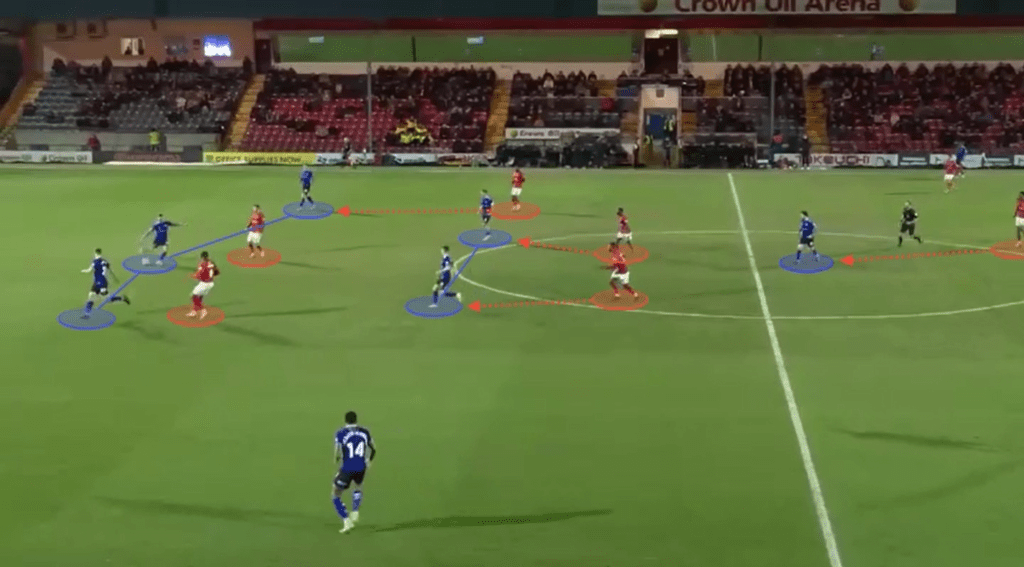
York’s #6, Alex Hunt, was positioned zonally, between the lines. He picked up one of Rochdale’s #10’s, and right-sided centre-back, Malachi Fagan-Walcott, could also step into midfield to press the other, when necessary. This left York’s remaining three defenders to challenge Rochdale’s front three.
One of my major criticisms this season with McNulty’s side is their over-persistence with ‘playing out’ from defence, even when man-to-man pressure is applied – which can be difficult to play through.
Below, we can see how York applied man-to-man pressure. Beckwith had the ball, but all of the clear passing options had been eliminated due to York’s press. As Rochdale’s priority is to ‘play out’ from defence, Beckwith attempted to keep the ball rather than going long. However, as he was marked closely, he turned back into pressure and lost possession. York broke and had a shot at goal, which resulted in a corner.
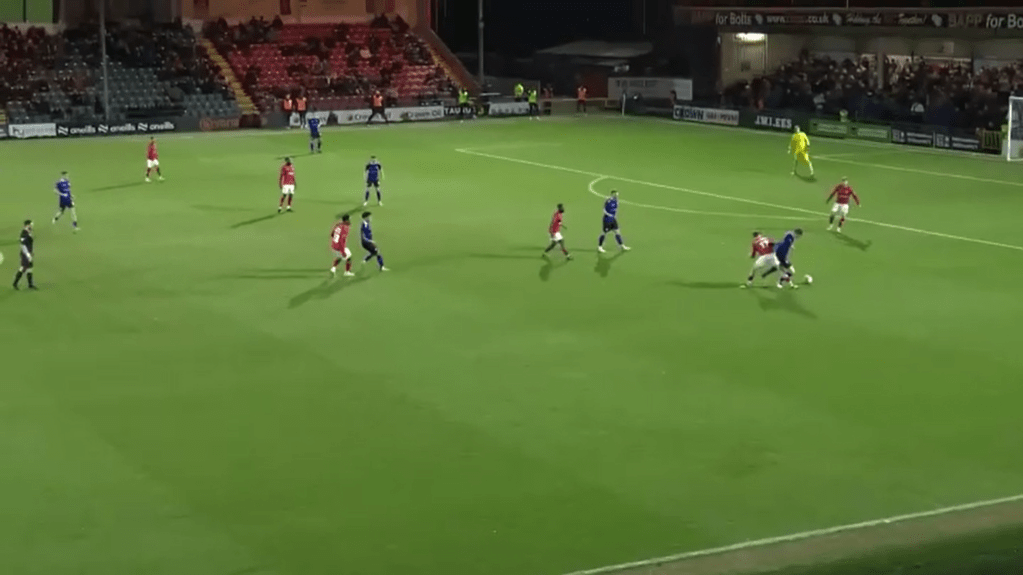
It was, therefore, no surprise to see York eventually score as a result of turning possession over high up the pitch.
Below, we can see Rochdale pass back to their goalkeeper, Waller. Notice how York are already setting up to apply man-to-man pressure before the ball has reached his feet.
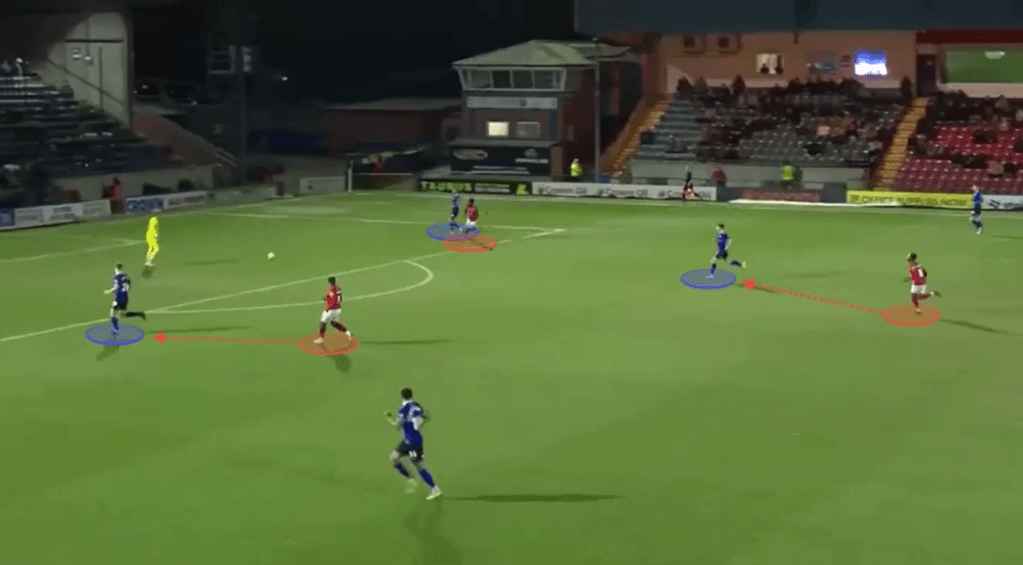
However, Waller’s first instinct was to try and help his side ‘play out’ rather than recognising it would be difficult for them to do so. He took a touch, and the only realistic passing option he had was to make a risky straight pass into the midfield. Possession was turned over, York advanced, and the move resulted in a goal.
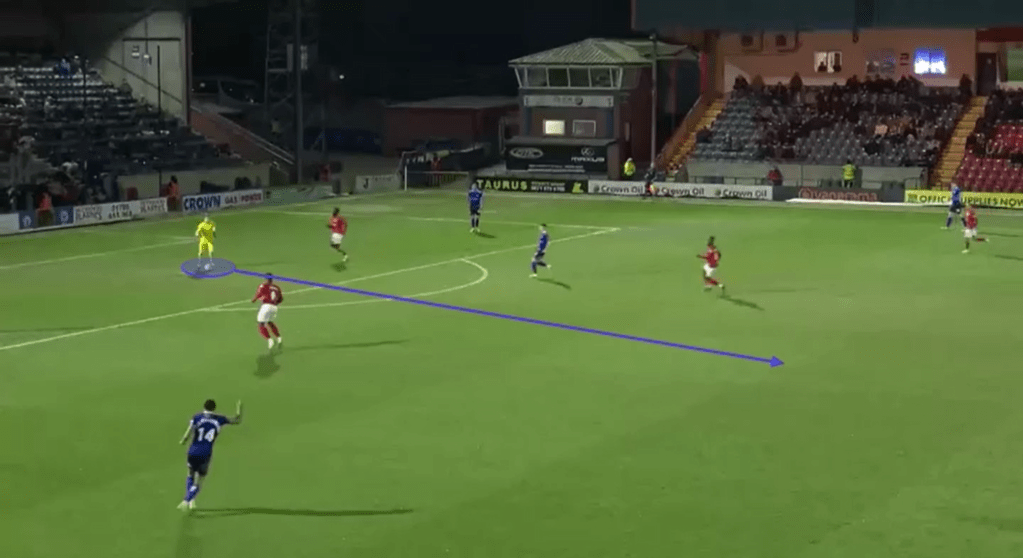
However, Rochdale did have some success with breaking York’s press. With York’s creating 1v1 battles all over the pitch, if Rochdale won these duels, they could progress and break at speed. Additionally, if Rochdale managed to find one of their #10’s when they went untracked by either Hunt or Fagan-Walcott, they could find space and attack the space that York’s press left behind.
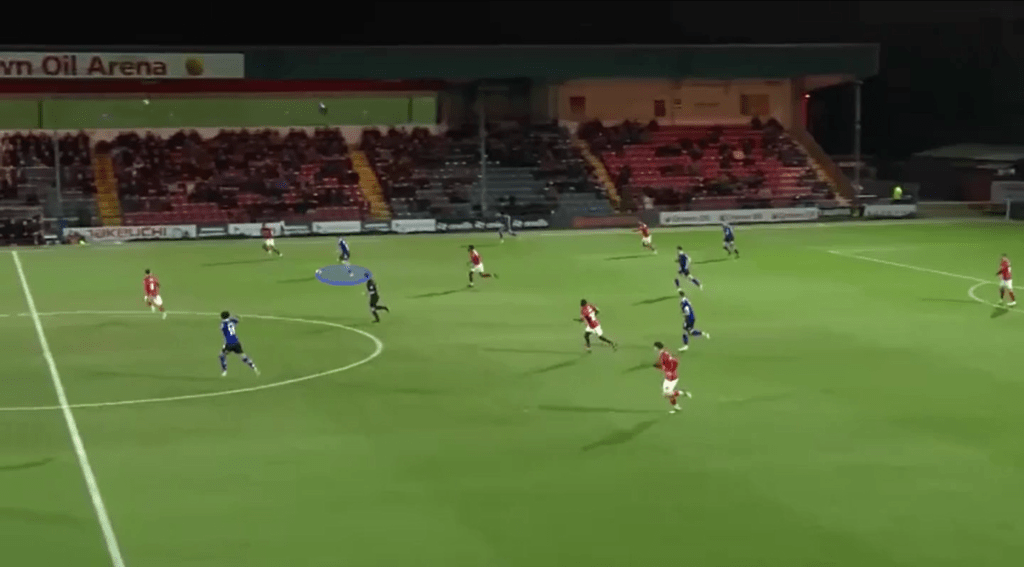
York manufactured a number of opportunities through this method, but didn’t have the quality to make more of them.
On the other hand, York built play in a 4-2-4 shape. Harrison Male was in goal, behind a back-four of Ryan Fallowfield, Fagan-Walcott, Callum Howe and Cameron John. Hunt and one of York’s #8’s, Joe Felix, were in the pivot; with York’s other #8, Marvin Armstrong, pushed into the last line alongside the front-three of Lewis Richardson, Ollie Pearce and Tyrese Sinclair.
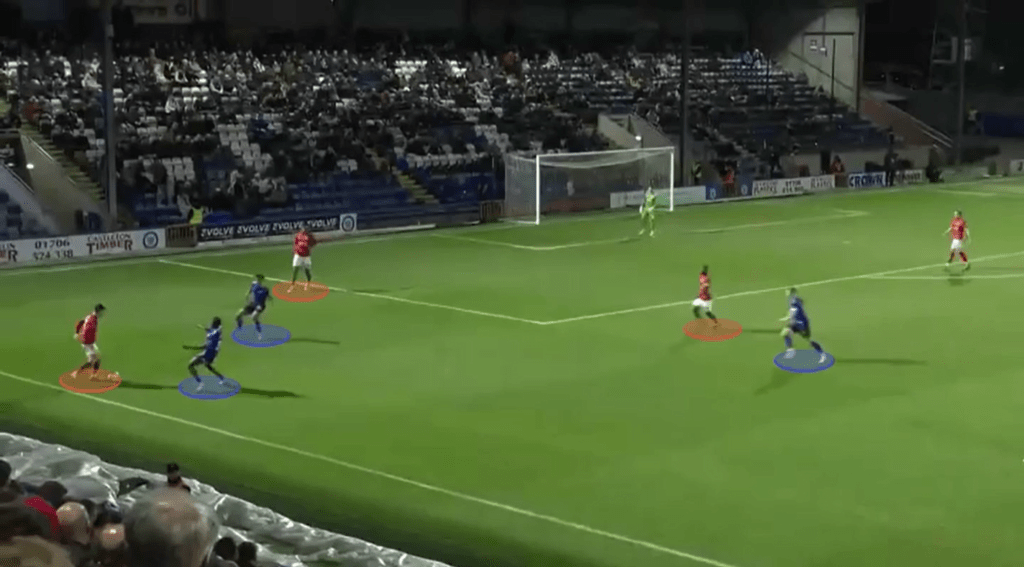
As we can see below, Rochdale’s front-three pressed York’s back-four and goalkeeper. Their centre-forward, Mitchell, was responsible for both pressing Howe and shadow-marking Hunt; Gilmour man-marked Felix; and Fallowfield was left free.

With Mitchell having to shadow-mark Hunt, rather than being released to apply pressure to the first line, it allowed York with a lot of time & space on the ball. When Mitchell did apply pressure, York had an overload behind him as Gilmour was already marking Felix.
The idea, however, was for Rochdale to prevent central progression, forcing York to build around their block, before matching up in man-to-man fashion on the sides, as below.
Additionally, York are more multifaceted that Rochdale. Where Rochdale are more reliant on ‘playing out’, and only going long as a last resort, York are more pragmatic and are capable of playing over pressure, too.
This is where Pearce comes in. His role as a false-nine for York allows him to drop deeper, into the midfield. When York were faced with man-to-man pressure, they were able to clip passes over Rochdale’s press into Pearce, who wasn’t tracked by his marker, Hogan.

Although Rochdale’s press was more adventurous from York goal-kicks, a similar issue was still present. Hunt dropped deeper, in-between the centre-backs, with Howe moving wider to the left. McBride inverted to press Howe, which meant that Mitchell was no longer responsible for marking both players.
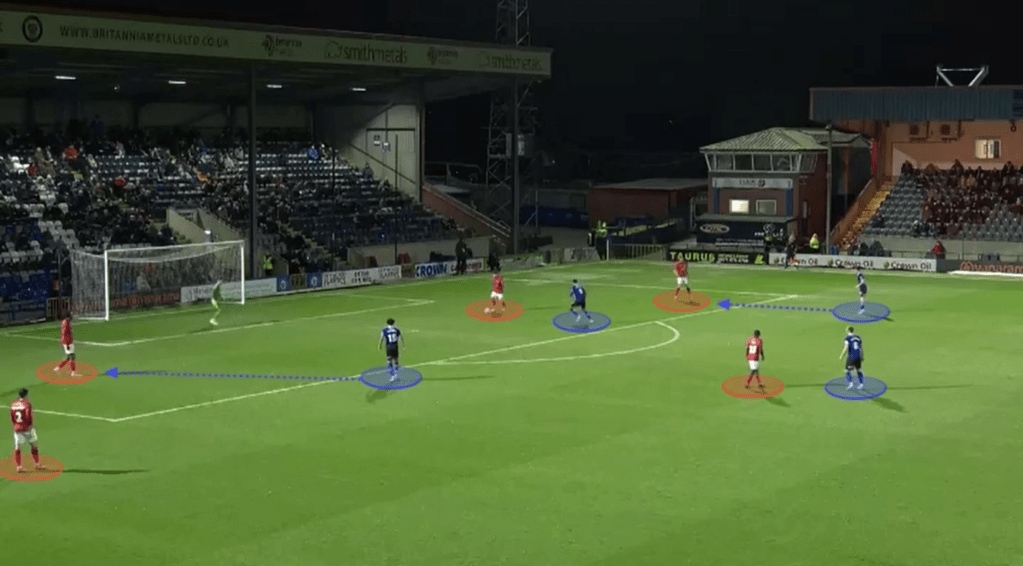
The press was backed up by the wing-backs, and Rochdale were now pressing in man-to-man fashion (although York still used Male to create a +1).
With Pearce dropping between the lines, he should have been picked up by Hogan, releasing East to press Armstrong. However, because Hogan isn’t mobile enough to fulfil that role, East’s positioning had to be more conservative, which left Armstrong free between the lines.

The result left York in second place in the National League – eleven points off table-toppers Barnet – whereas Rochdale remain in the top seven with games in hand on those around them.
However, Rochdale’s press contributed to York having almost 60% of the possession, and controlling the match from start to finish. My season-long concerns with regards to their press and persistence of ‘playing out’ remain, and they will have to be much better if the two sides are to meet again in the play-offs.
 Shrimper Stats