Gus Scott-Morriss has had an incredible season for Southend United! The right-back has scored 17 goals so far in the National League which, at the time of writing, ranks him joint-fourth in the division.
In this in-depth scout report, I explain how he manages to score so many goals, and analyse his profile in each of the following phases: in-possession, out-of-possession, transitions and set-pieces.
In-possession
Scott-Morriss can either be used as a right-back within a back-four, or at right wing-back. As such, he is either positioned in the first line of build-up, or high and wide as a wing-back. Either way ensures he is able to receive the ball from his teammates in space — either with play in-front of him, or outside of the opposition’s defensive block. He also has excellent aerial ability which allows him to challenge for duels if Southend decide to ‘go long’ and bypass the opponent’s press.
Unlike full-backs such as York City’s Joe Felix, Scott-Morriss can’t reliably invert into the midfield alongside a central-midfielder. He isn’t hugely comfortable receiving the ball whilst facing his own goal when under pressure, and lacks the technical ability required to dictate the tempo of matches to the same level a natural midfielder would be able to.
However, Scott-Morriss is a tactically intelligent player who can still invert; it’s just that he’s more effective when inverting higher up the pitch, in the latter stages of build-up…
Below, we can see striker Macauley Bonne move out to the right touchline. This acted as the trigger for Scott-Morriss to invert into the half-space.
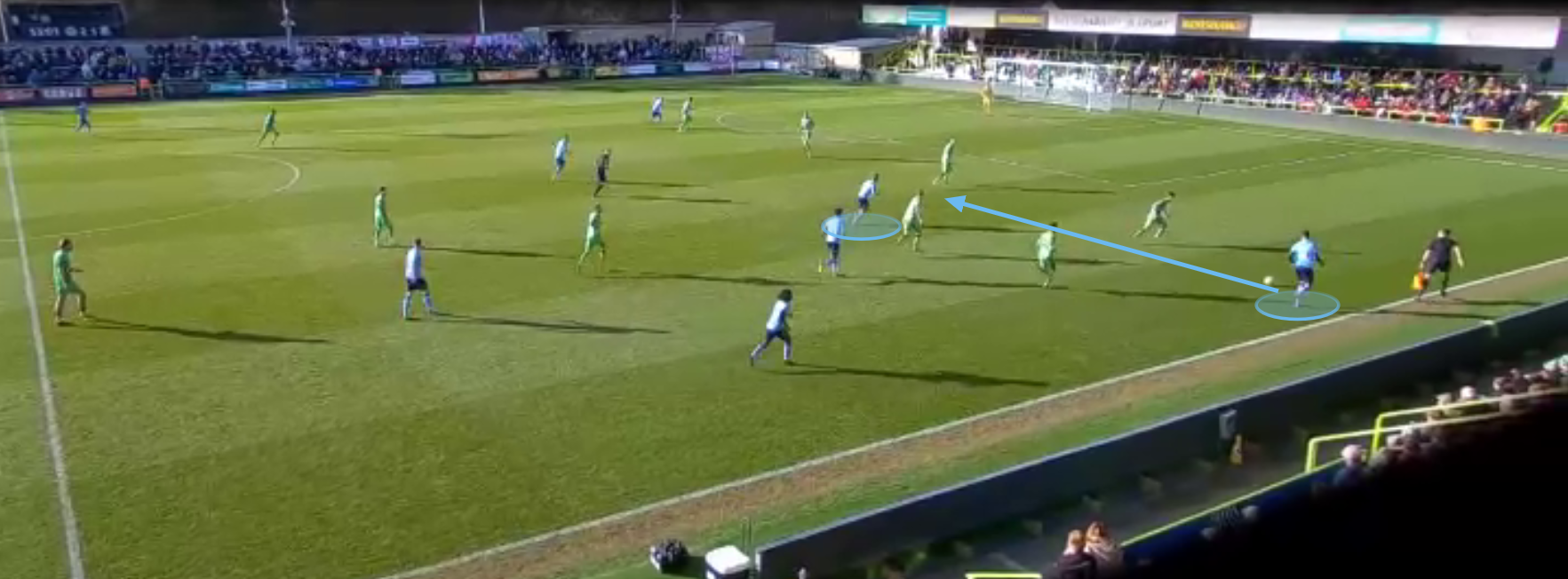
Bonne passed just in-front of Scott-Morriss, who accelerated with the ball past his marker (below). He reached the by-line and delivered a dangerous cross into the penalty area.

Rather than accelerating past opponents, as above, this half-space positioning of Scott-Morriss also allows him to be able to run onto through passes played in-behind the opposition’s defensive line.
Either way, this positioning brings him closer to the opponent’s goal and increases the potential danger of his crosses.
However, being positioned in the half-space doesn’t just affect how Scott-Morriss can help to create chances. With him closer to the goal, the distance he has to travel to arrive in the penalty area is reduced. This means he can more reliably become a goal threat.
In a match away to Eastleigh, Scott-Morriss had inverted into the half-space with play on the opposite side of the pitch (below).

The move progressed, a cross was delivered, and Scott-Morriss scored. With him already within the confines of the penalty area, the ground Scott-Morriss had to cover to get on the end of the cross was significantly reduced compared to if he was holding the width.
But what about when Scott-Morriss doesn’t invert?
Even if he’s holding the width, he possesses excellent anticipation and intelligent movement, which helps him to arrive in the penalty area late and go unnoticed, or ‘box crash’, to get on the end of crosses.
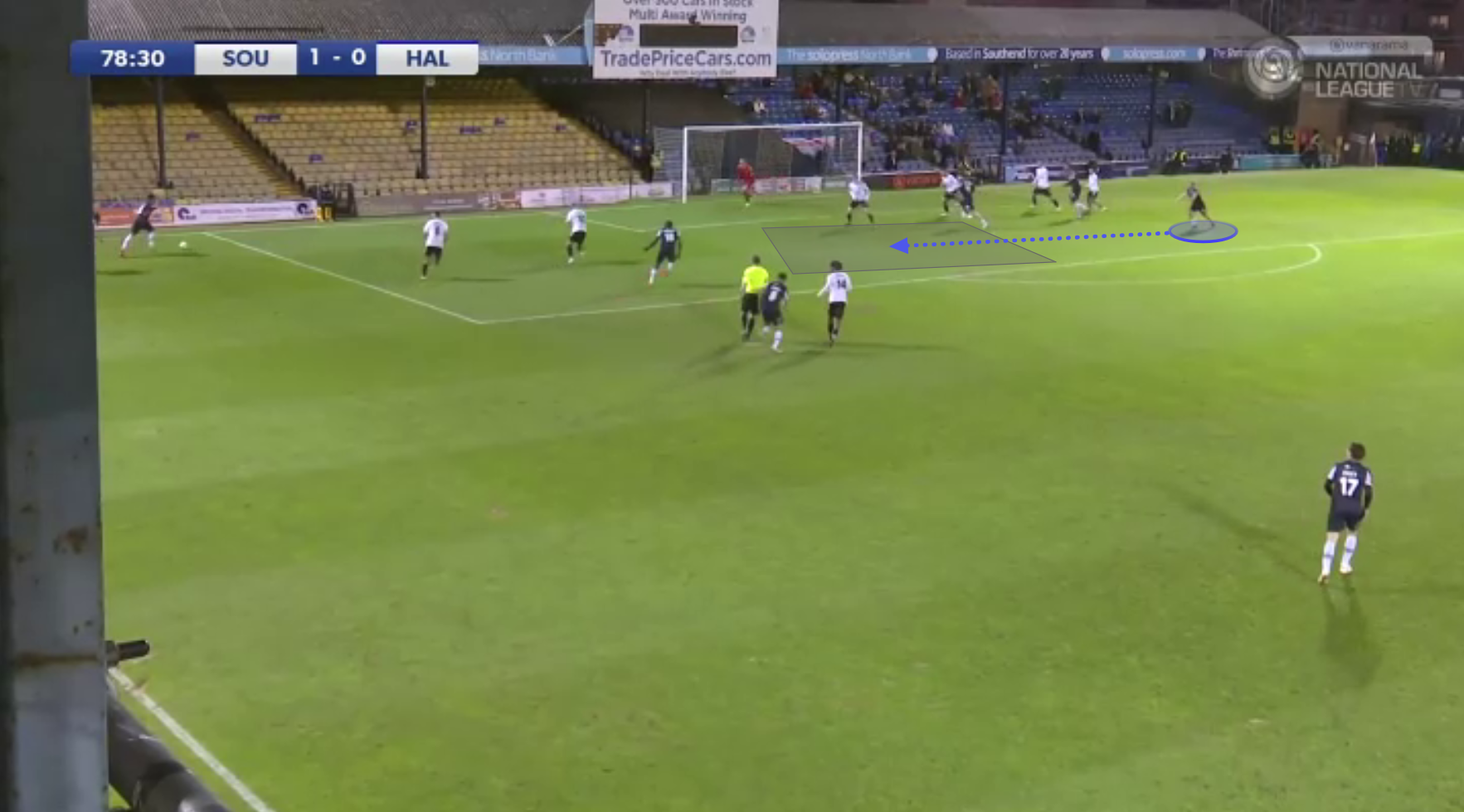
Below, we can see Scott-Morriss on the far-side of the pitch.

Southend combined down their left-side and, just as Nathan Ralph was preparing to deliver the ball into the penalty area, Scott-Morriss made a clever run into the space that opened up when the other players moved towards the goal (below). He got on the end of Ralph’s cross to score.
Surprisingly, considering his size, Scott-Morriss has excellent aerial ability. Fifteen of his 30 National League goals for Southend have been scored through headed shots. Scott-Morriss guarantees output for Southend. He has 36 goal involvements in almost three seasons, compared to an expected figure of 36.72, and averages 0.29 goal involvements per 90 minutes — truly phenomenal numbers for a defender.
Scott-Morriss can create from deeper areas, in the form of deep crosses into the penalty area, or deliver crosses from his wide-right position. This is illustrated in the below visualisation, which shows all of Scott-Morriss’ ‘key passes’ for Southend so far this season in the National League.
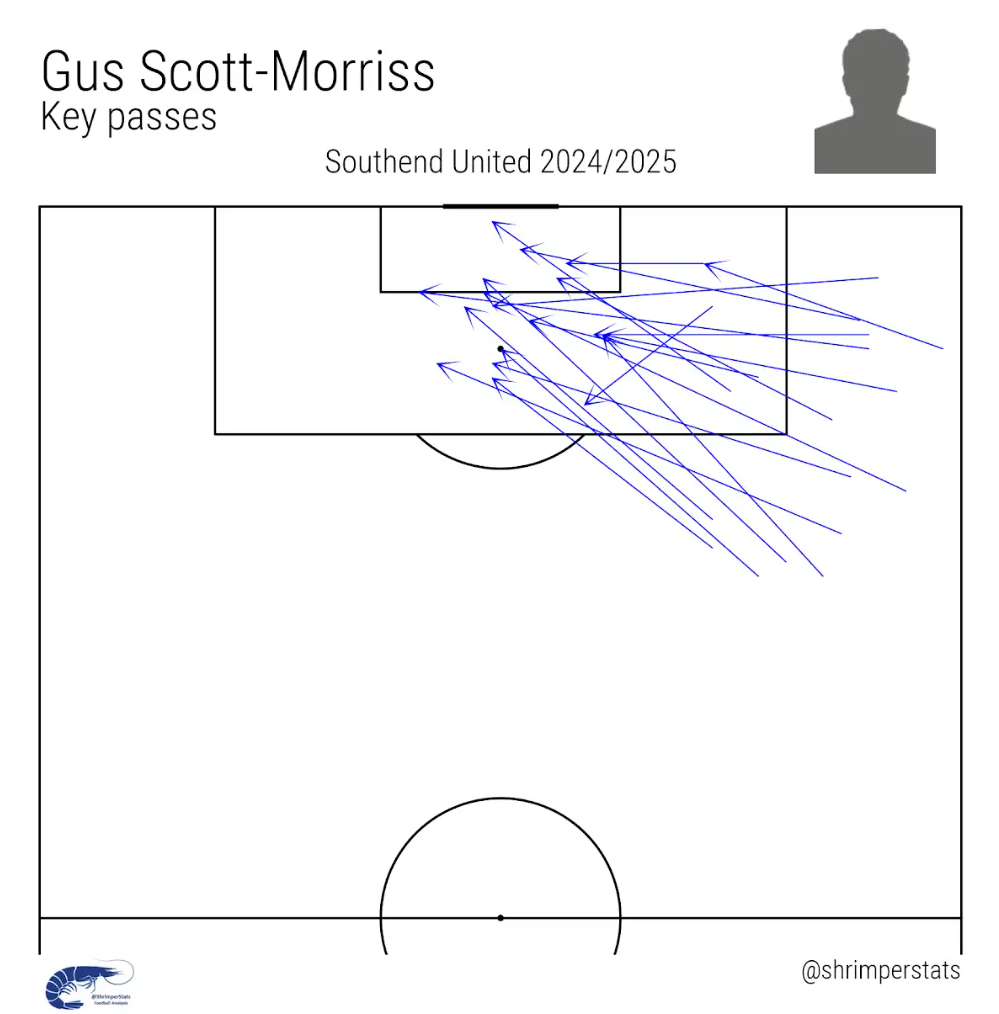
Scott-Morriss attempts, on average, 5.6 crosses per 90 minutes — ranking him 3rd in the whole division. He has been successful with 37.34% of his those, and attempts an average of 5.48 crosses per 90 from the right flank — ranking him 1st.
When holding the width on the right, Scott-Morriss is able to take on his marker to create separation. However, he lacks a certain amount of explosiveness in order to reliably do so to a top standard, compared to a natural winger. He’s, therefore, more effective when making over/underlapping runs beyond a teammate, or when receiving the ball in space after combining with others.
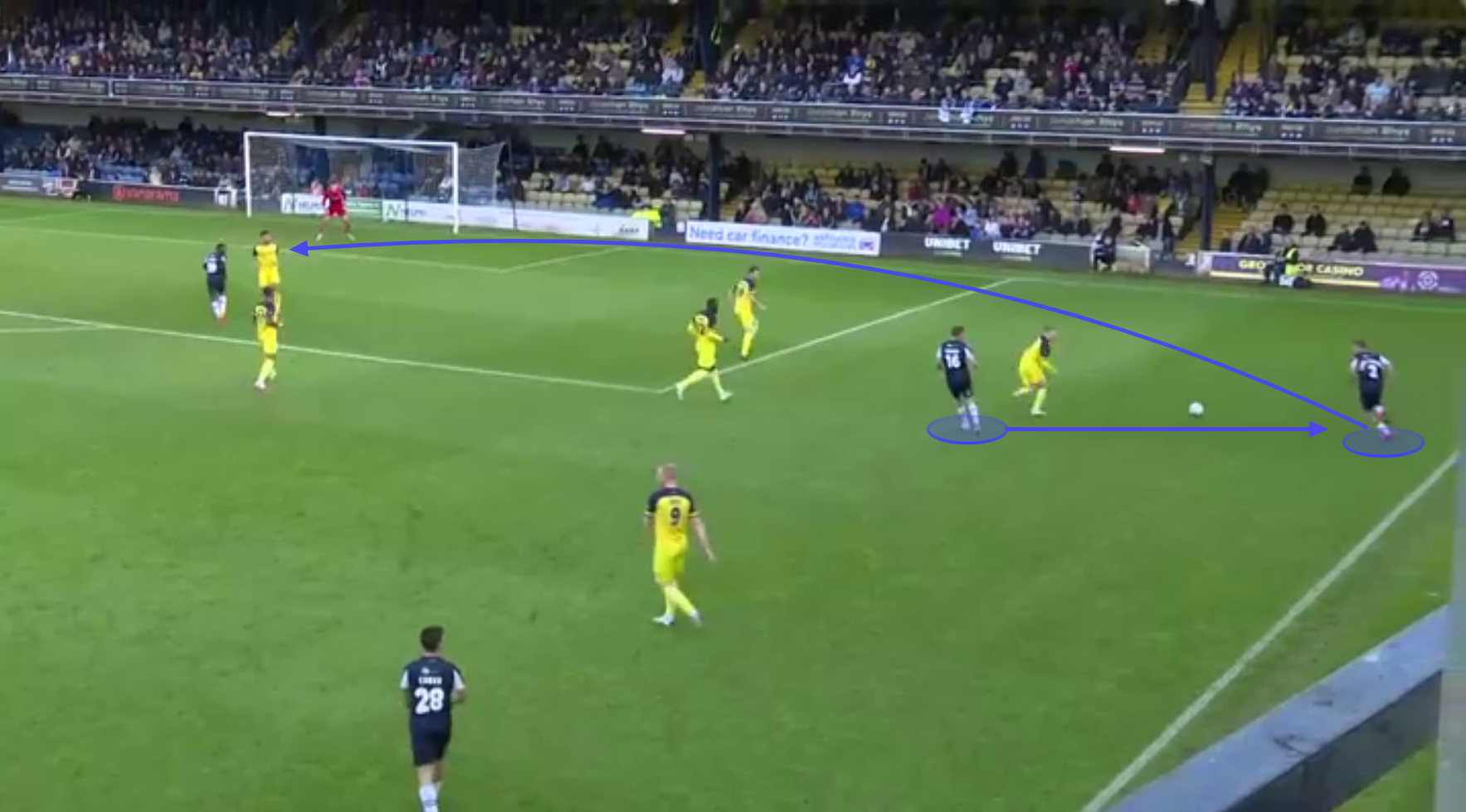
Below, Harry Taylor made a forward run with Scott-Morriss out wide. This attracted the Solihull Moors defender to press him, rather than marking Scott-Morriss tightly. Consequently, when Taylor passed to Scott-Morriss, separation had already been created and he was able to deliver a first-time cross into the penalty area, which was finished by Daniel Kanu.
Out-of-possession
Scott-Morriss possesses great energy to get up and down the pitch for the entirety of the 90 minutes — which is vitally important for wing-backs. The 27-year-old is also intelligent when it comes to deciding when to press and when to ‘back off’.
Below, versus Eastleigh, notice Scott-Morriss’ body positioning. He was positioned ‘side-on’ with his weight evenly distributed on both feet, meaning he was ready to either press the winger if a pass went out to him, or retreat towards his own goal if Southend were played over.

When asked to defend deeper, as Scott-Morriss’ defensive nature is quite aggressive, he wants to challenge for duels. His aggressive nature means he’s not the best 1v1 defender, as he often makes the first move and isn’t always able to recover once his marker beats him. He could, therefore, do a better job at preventing crosses from being delivered down his side of the pitch.
Below, Scott-Morriss was aggressive and stepped into the midfield in an attempt to intercept a switch pass to Forest Green Rovers’ left-side. However, he was unable to intercept it and a deep cross was easily allowed to be delivered to the back post, which was finished.

Here, versus Rochdale, Scott-Morriss was unable to prevent a cross from being delivered down his side of the pitch. The cross was sent to the back post, and the move resulted in a goal.

When opponents attack down the opposite side of the pitch, and Southend are asked to defend their penalty area, Scott-Morriss’ aerial ability enables him to help defend crosses effectively.
Transitions
Whether he plays as a right-back or right wing-back, Scott-Morriss is positioned in the last line of defence when Southend are without the ball. Therefore, he isn’t a reliable threat in transition due to the distance that is required to be travelled in order to get up the pitch and support attacks.
However, Scott-Morriss has excellent energy levels and anticipation which helps him to regularly cover ground quicker than his markers.
Below, as soon as Southend turned possession over on the half-way line, Scott-Morriss sprinted forward to support the attack.
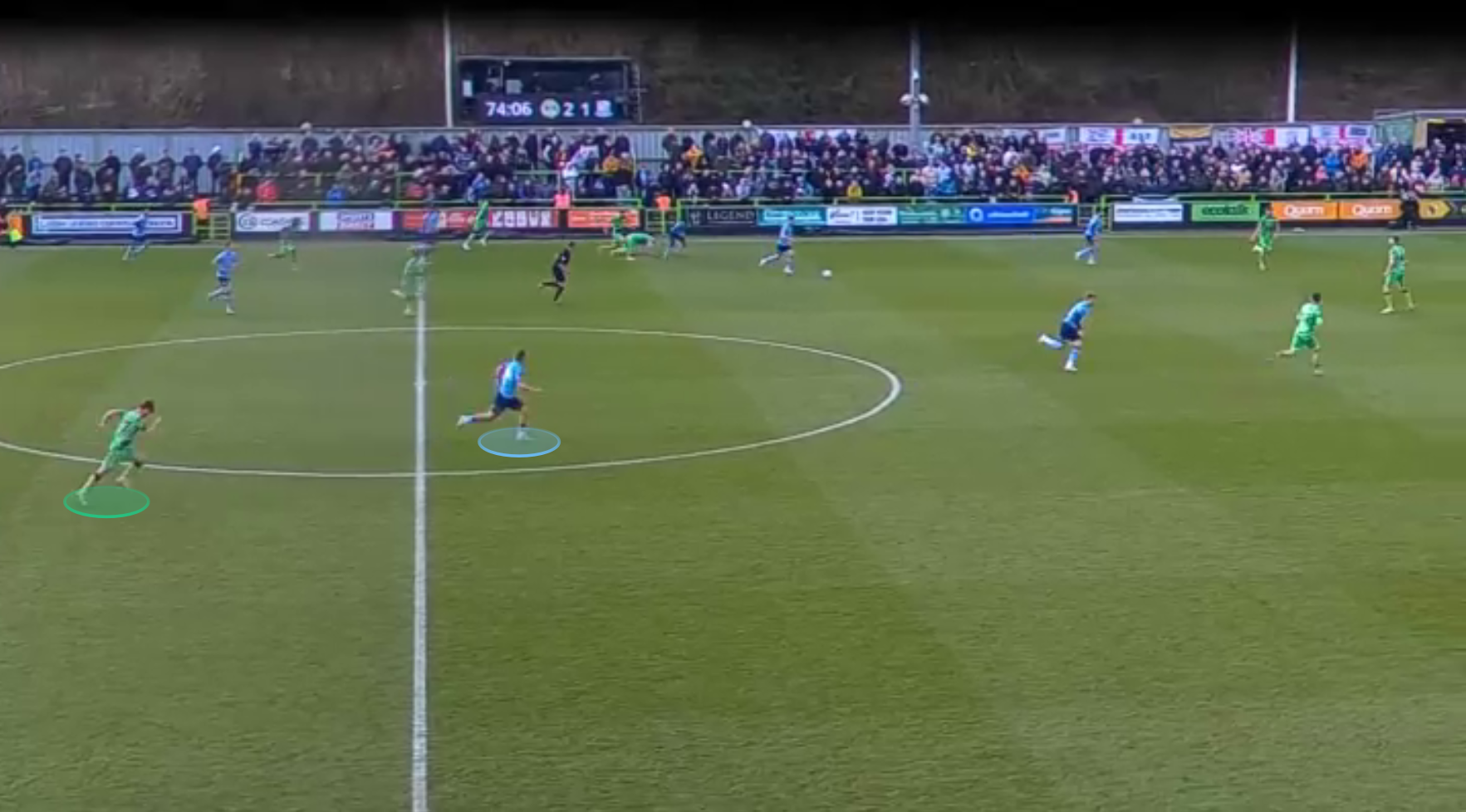
The ball was passed out wide to Charlie Kendall, and Scott-Morriss made a run into the centre of the penalty area. As we can see below, just as he was about to strike after receiving a pass from Kendall, Scott-Morriss was in space away from his marker — Forest Green’s left-back — who he beat in a foot race.

Here, Southend played over Boreham Wood’s defensive block. Scott-Morriss anticipated that Southend may win possession high up the pitch and create a goalscoring opportunity. Before the opportunity had even been created, Scott-Morriss had already started his run, with his marker standing flat-footed.
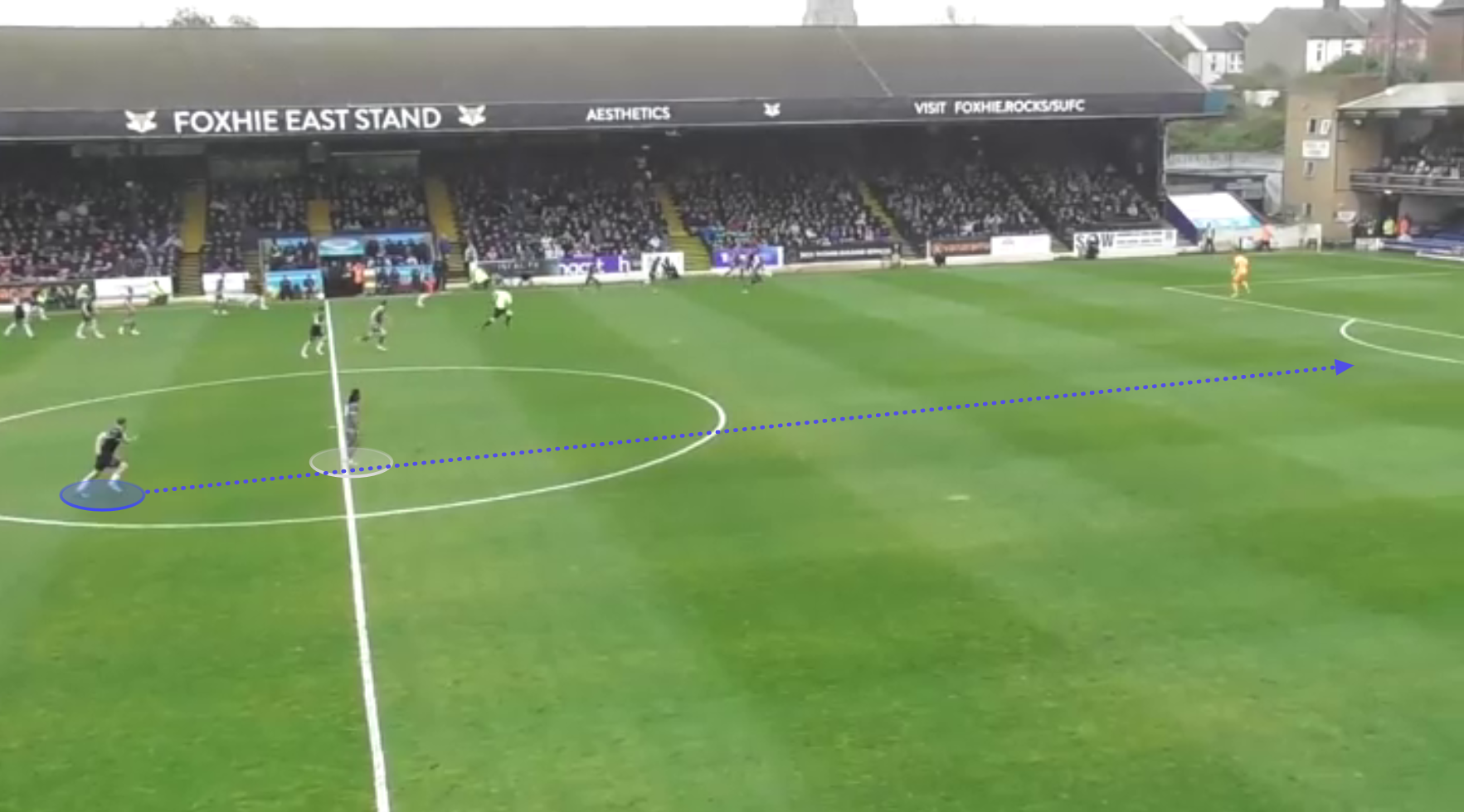
Scott-Morriss sprinted into the penalty area, away from his marker. Then, after the cross was delivered, he had time and space to take a touch in order to control the cross, before unleashing a powerful strike just underneath the crossbar to score.

Set-pieces
Scott-Morriss possesses a long throw which can be delivered into opponent’s penalty areas. He is also comfortable delivering crosses into the penalty area via corners and free-kicks, and isn’t afraid to attempt shots at goal directly from free-kicks, too!
However, Scott-Morriss is undoubtedly most effective from set-pieces when getting on the end of crosses — in both penalty areas.
The below visualisation shows all of Scott-Morriss’ attempts at goal so far this season in the National League. The larger the dot size, the higher the expected goals value for that shot (and the better the chance). Dark dots signal shots on target, and dots with a red border signal goals.
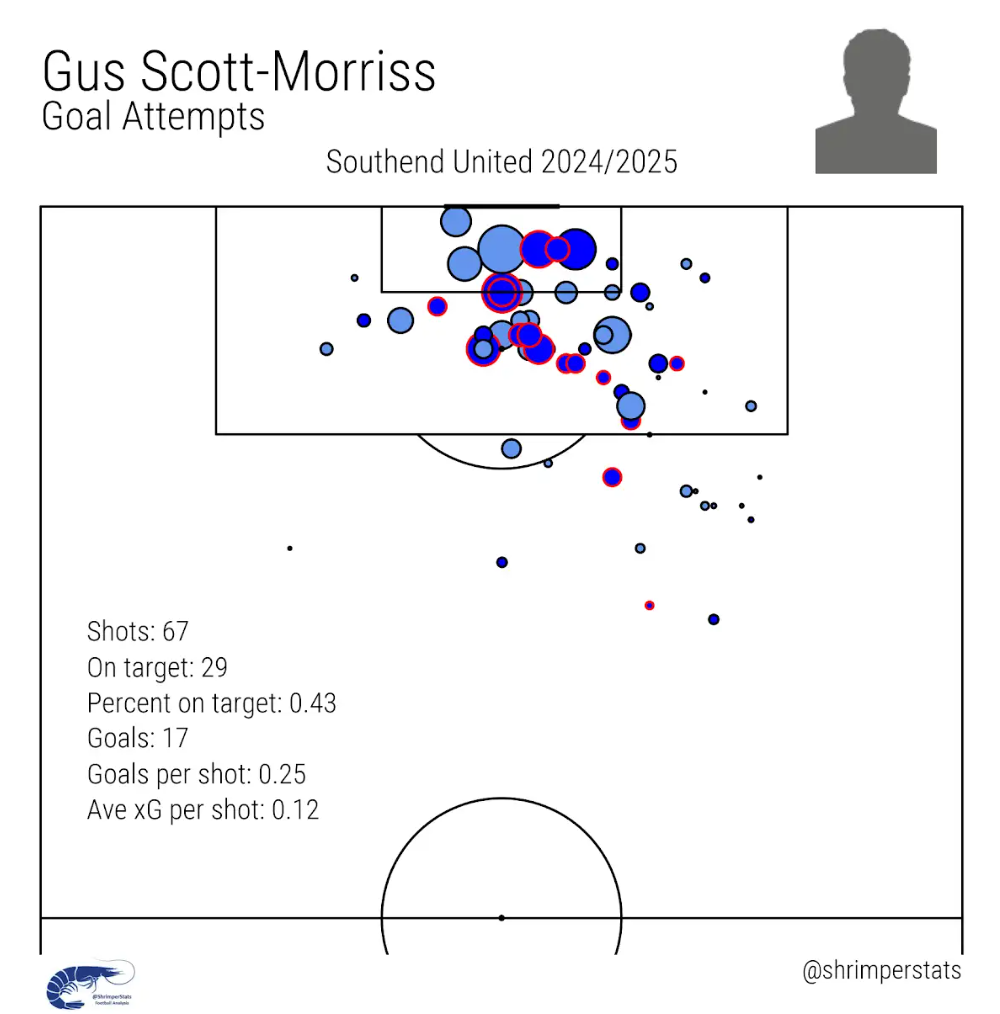
Notice how there are a lot of high-quality shots at goal from in and around the opponent’s six-yard box. Scott-Morriss’ intelligent movement to find space near the goal allows him to consistently get on the end of these chances. As he’s close to the goal, he has a great chance of converting them. Over 43% of the shots that Scott-Morriss has attempted this season have been on target, and over 25% have been converted into goals.
Summary
To summarise, Scott-Morriss can play as either a right-back or right wing-back, and is even comfortable inverting high up the pitch between the lines. These positions allow him to create from deep, support a winger, or even hold the width himself.
He’s a very intelligent player with an excellent ability to anticipate future events which, in addition to his athleticism, allows him to find space and go unnoticed in opposing penalty areas in order to regularly get on the end of goalscoring chances.
Although his aggressive nature when defending means he could be better at preventing crosses from being delivered down his side of the pitch, Scott-Morriss is an incredibly important tactical weapon for Kevin Maher’s side. He can be used in a multitude of roles, and his aerial ability even means that he’s able to be effective from set-pieces in both penalty areas.
 Shrimper Stats