Barnet moved past the 90-point milestone with a 3-1 home victory over Carl Magnay’s Gateshead. Dean Brennan’s side now need a maximum of eight points from their remaining six National League matches to win the division. In this article, I detail the tactics that were at play from both coaches and explain how it led to the result.
As we can see below, Barnet pressed Gateshead in man-to-man fashion all across the pitch as they looked to ‘play out’ from defence.
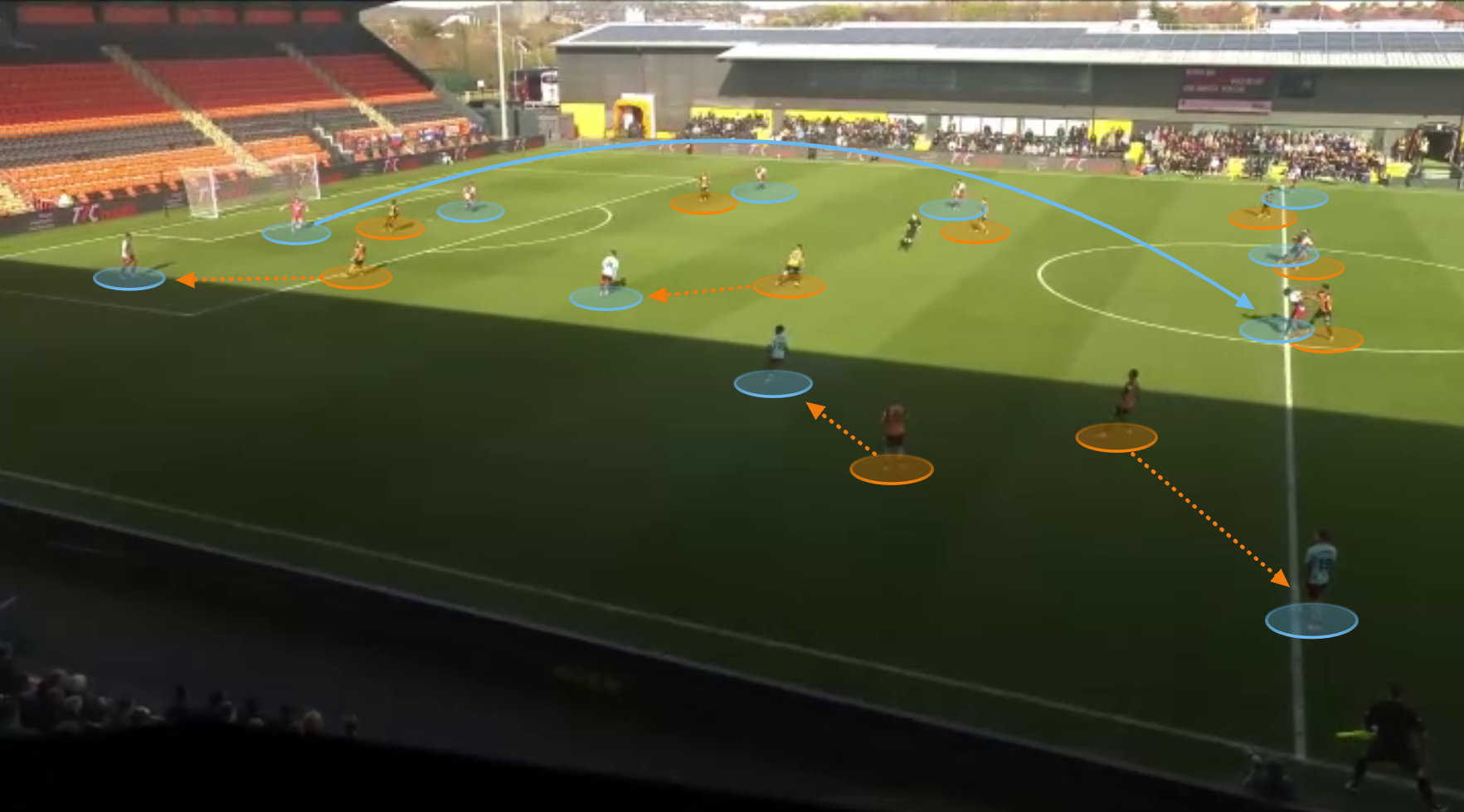
Gateshead’s right wing-back, Luke Hannant, and right-sided #10, Tyrelle Newton, were managed between Barnet’s left wing-back Ryan Glover and left-sided centre-back Myles Kenlock. Sometimes, Glover would move inside the pitch to press Newton (as above); at others, Kenlock would step into the midfield to press him, with Glover marking Hannant.
In fact, this pressing approach of Barnet’s led to their opening goal.
With Gateshead pressed man-to-man all over the pitch, and with no immediate passing options available, goalkeeper Tiernan Brooks was forced to ‘go long’ after receiving a pass from centre-back Robbie Tinkler — who had taken the goal-kick. Barnet challenged for the duel and won a free-kick. This was taken quickly and Barnet could progress down their left-side.
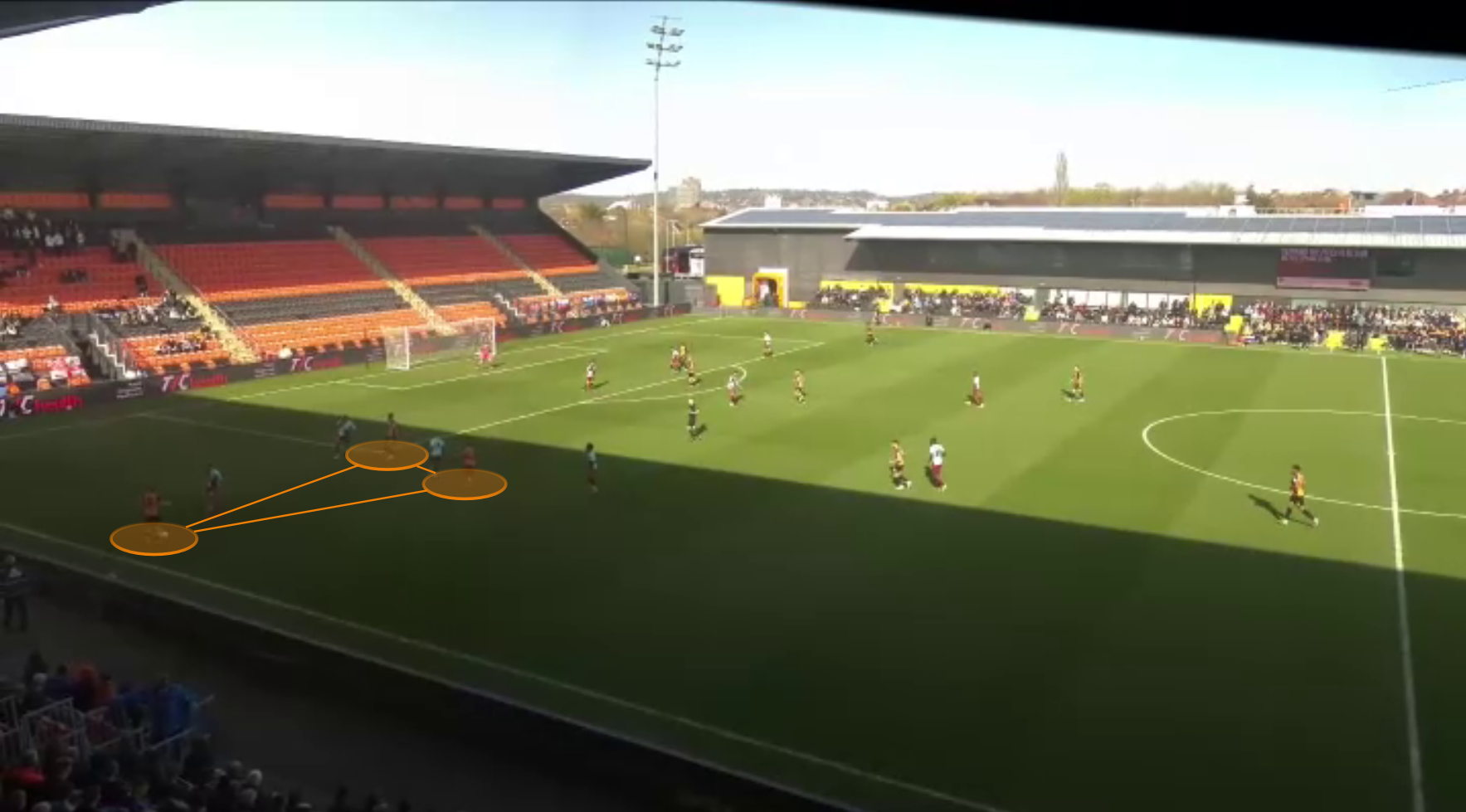
Kenlock joined the Barnet attack to help form a triangle with Glover and left-sided #10 Rhys Browne (below). From here, Barnet managed to work their way into the penalty area and found Kenlock in space, who finished.
However, Gateshead did have some joy with ‘playing out’ from their goal-kicks. As we can see below, once Tinkler passed this goal-kick to Brooks, Barnet centre-forward Lee Ndlovu left him to pursue Brooks. This acted as the trigger for right-sided #10 Callum Stead to back the press up and move towards Tinkler — consequently leaving left-sided centre-back Kenton Richardson.
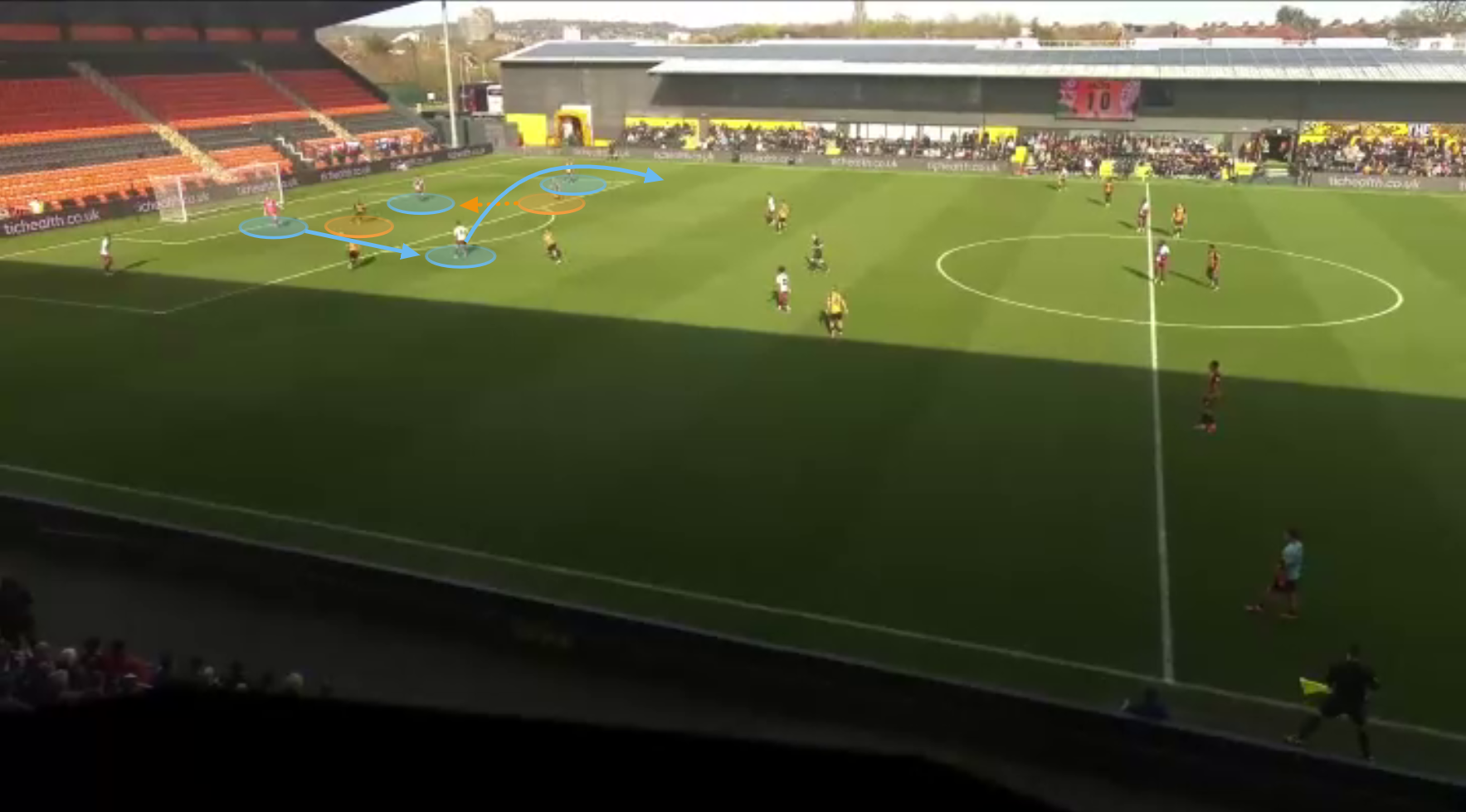
Brooks bounced a pass into the now free Richardson via one of Gateshead’s #6’s — the left-footed Regan Booty — and Richardson could progress.
However, Barnet are too much of a hard working side for this to have worked with reliability. Stead, in particular is excellent at tracking back and recovering when play has progressed past him. Consequently, Gateshead were unable to take full advantage of this manipulation of Barnet’s press.
Nevertheless, Brennan switched up his approach to pressing Gateshead’s goal-kicks shortly after.
Below, notice how Browne was now shadow-marking Booty to prevent the pass into him from Brooks. As a result, this encouraged Gateshead to pass out to their right-sided centre-back Ryan Bartley.
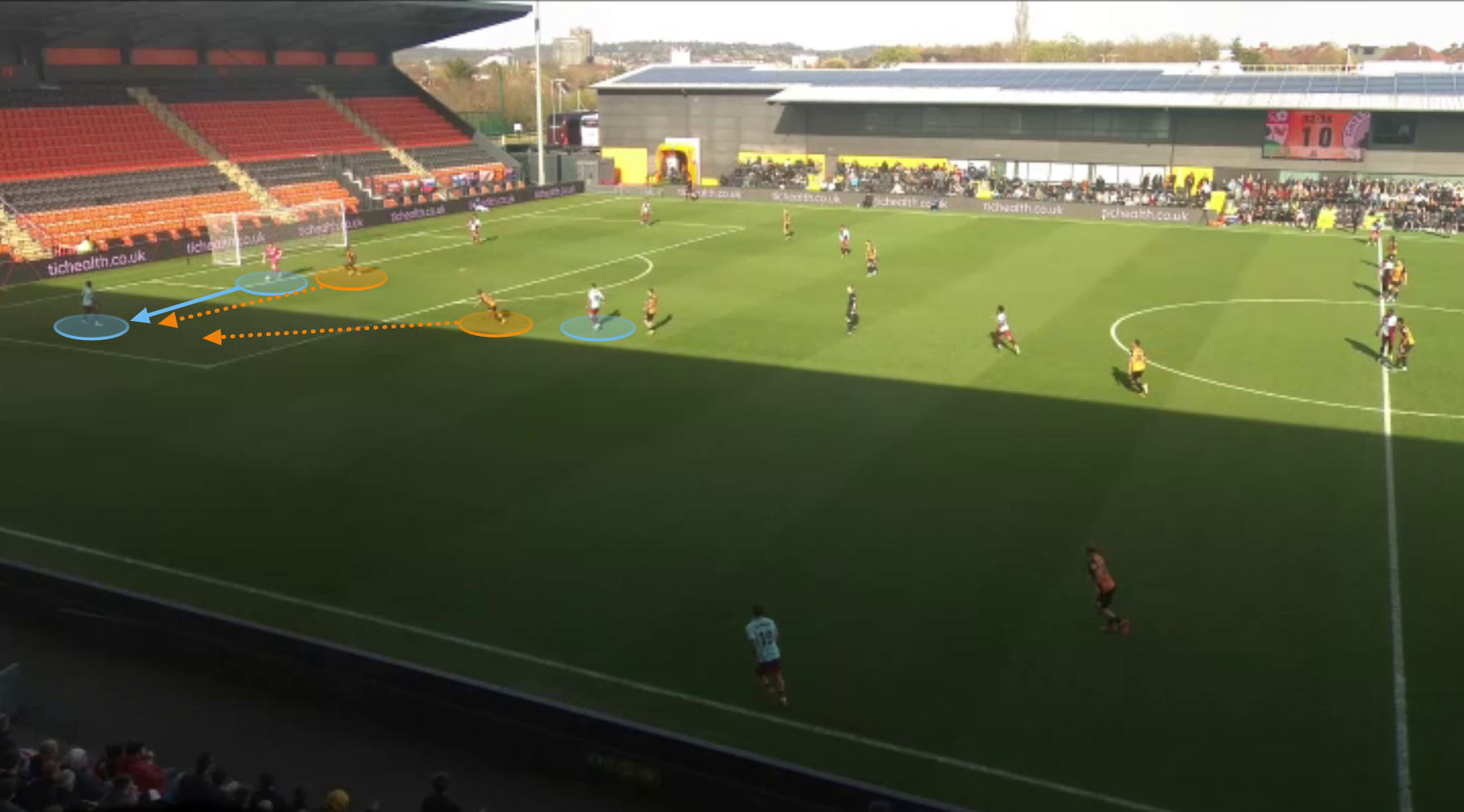
As soon as Brooks passed to Bartley, this triggered Browne to leave Booty and press Bartley, who was also under pressure from Ndlovu. He often had to ‘go long’, which prevented Gateshead from building attacks safely from their goal-kicks. A nice adjustment from Brennan to tighten Barnet’s grip on the match.
With both sides lining up in 3-4-2-1 formations, the blocks matched up and both sides regularly pressed in man-to-man fashion right the way across the pitch — even during open play. Below, notice how there is a Barnet player in close proximity to every single Gateshead player during their 3-2-5 build.
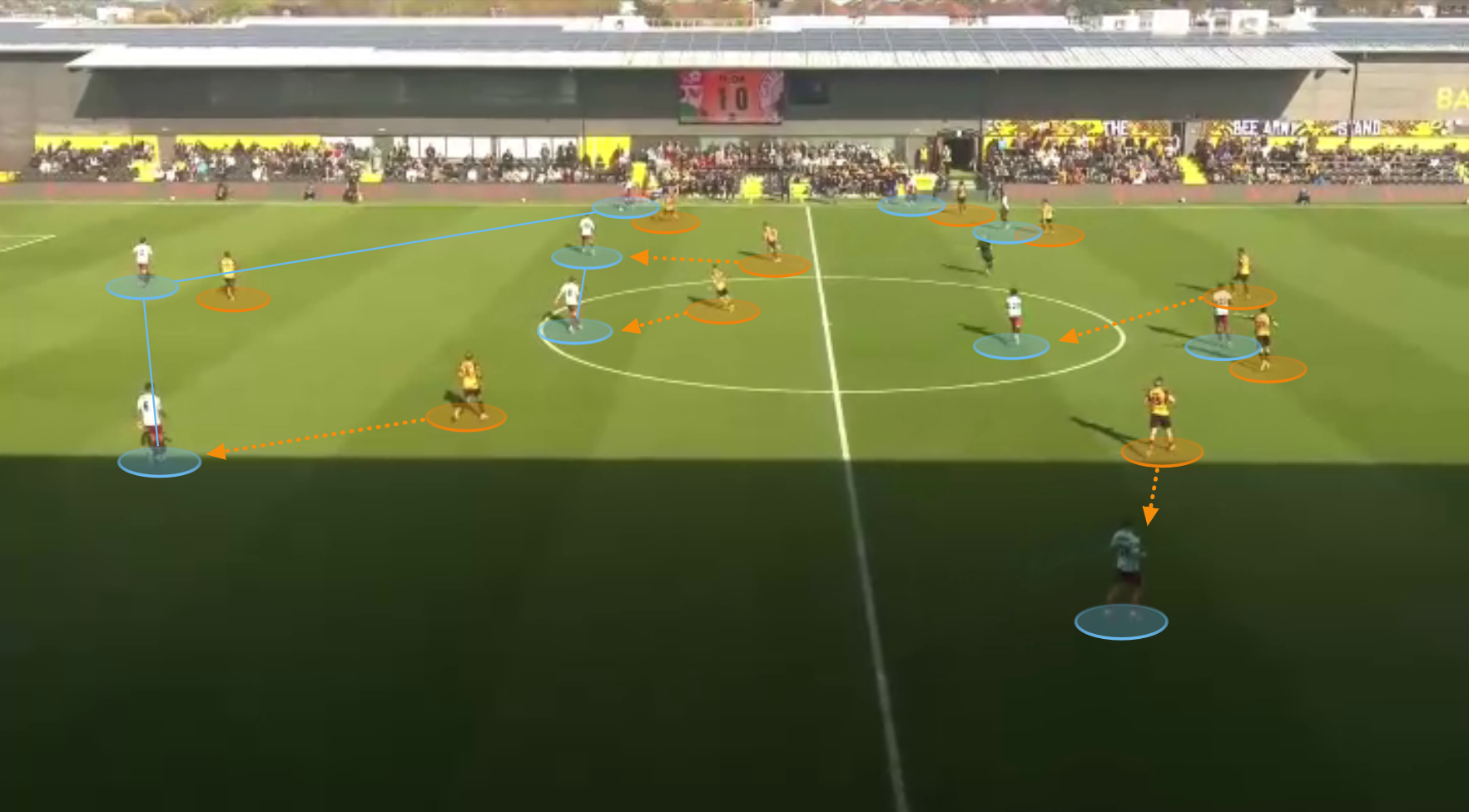
However, both sides want to build attacks from defence, and this requires their goalkeepers to be comfortable at stepping out of their penalty area in order to create a +1 in moments where everyone else is pressed man-to-man.
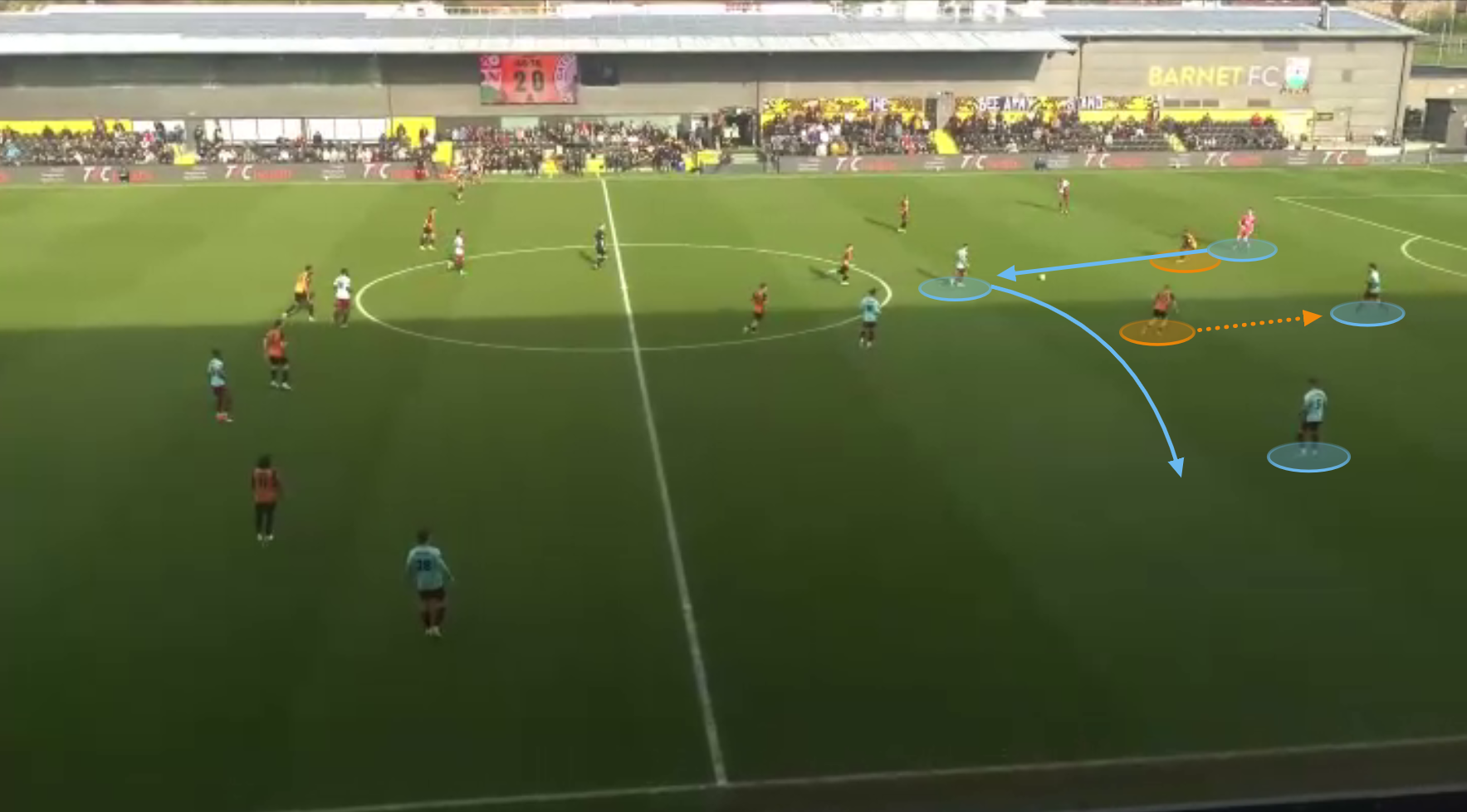
Brooks often stepped outside of his penalty area for Gateshead to act as a situational centre-back and create a +1. This meant Ndlovu now had two players to press: Tinkler and Brooks. When Ndlovu pressed Brooks, this acted as the trigger for Stead to back Ndlovu up and press Tinkler when the ball went out to him. However, Gateshead could manipulate this by feigning a pass into Tinkler to trigger Stead to press him, before finding the spare man.
Below, we can see this in action. Ndlovu pressed Brooks, who passed forward to Booty. It looked although Booty was going to pass back towards Tinkler, so Stead went to press him in anticipation. However, Booty used the angle created due to his left-footedness to make a first-time pass into Richardson, who had been left by Stead.
In fact, this very manipulation of Barnet’s press led to Gateshead’s goal.
Stead was outnumbered and was unsure whether to invert and press Tinkler or to hang wide and mark Richardson. He chose the passive approach in order to prevent an easy progressive pass to Richardson. However, this opened up space in the centre of the pitch for Tinkler to drive into (below).
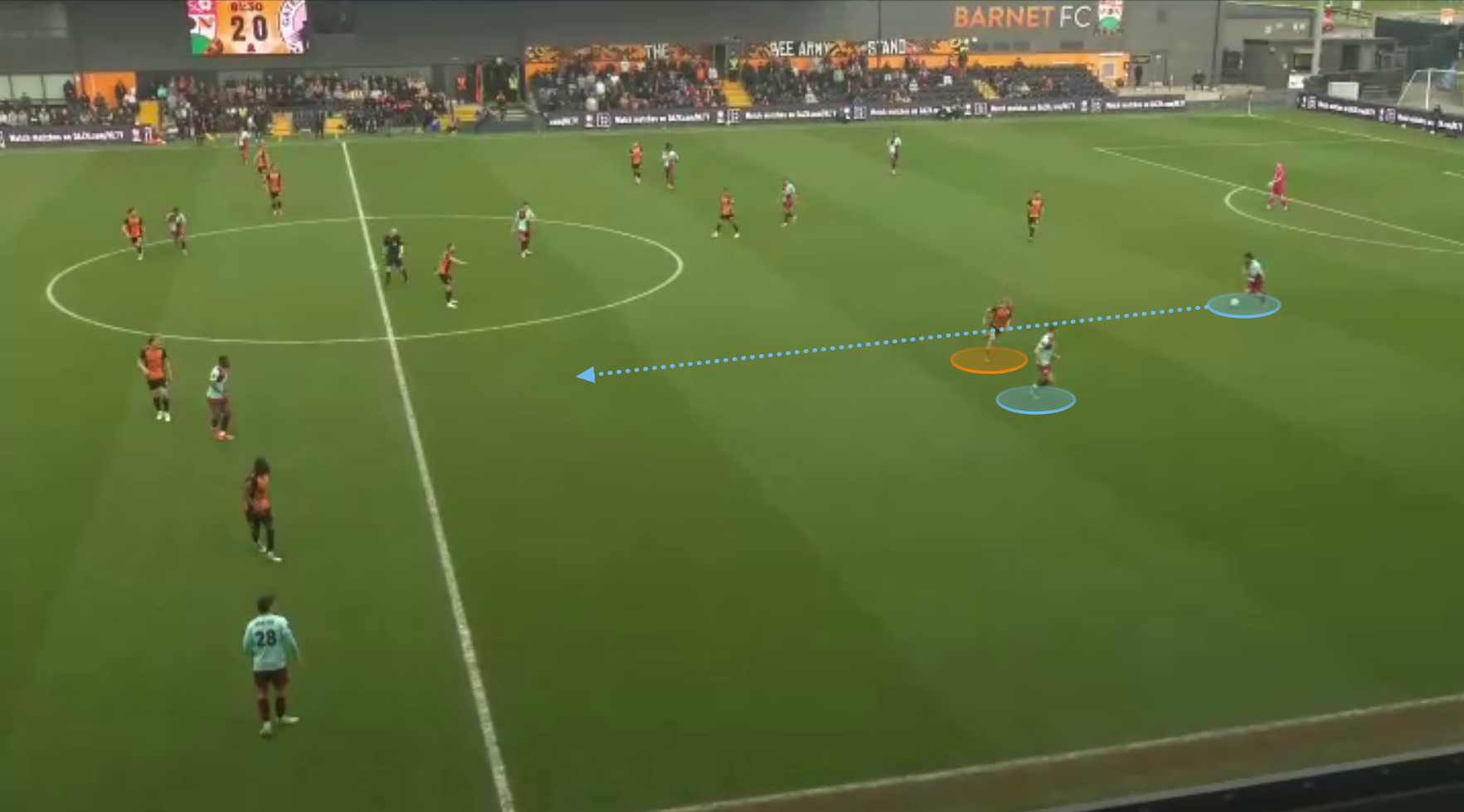
Tinkler found Gateshead’s left-sided #10, Jovan Malcolm, who was pressed by Barnet’s right wing-back Idris Kanu. Once he had released the ball, Malcolm made a forward run, but Kanu allowed Malcolm to get goal-side of him. He was presented with an opportunity to attempt a shot at goal, which he finished.
Gateshead also attempted to press Barnet in man-to-man fashion all across the pitch, however their press was more easily broken than Barnet’s.
Below, we can see how Browne dropped into the midfield and wasn’t followed by Bartley. This allowed Browne to overload Gateshead’s press, receive the ball with time and space in the centre of the pitch, and help his side to progress.
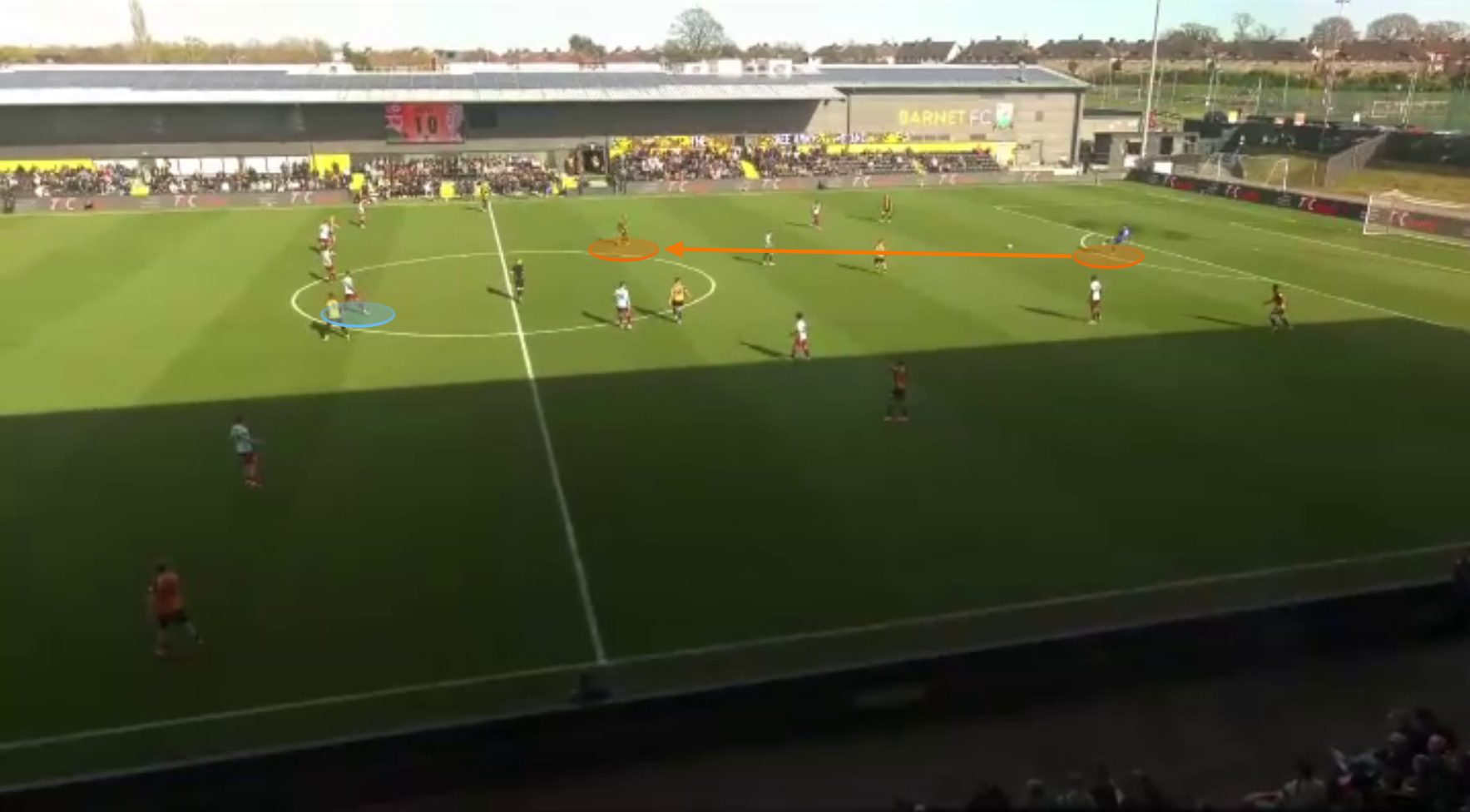
In this next example, notice Booty’s positioning in the centre of the pitch. He’s marking zonally in order to pick up Browne or Stead, if they drop into the midfield and go untracked by a Gateshead defender.
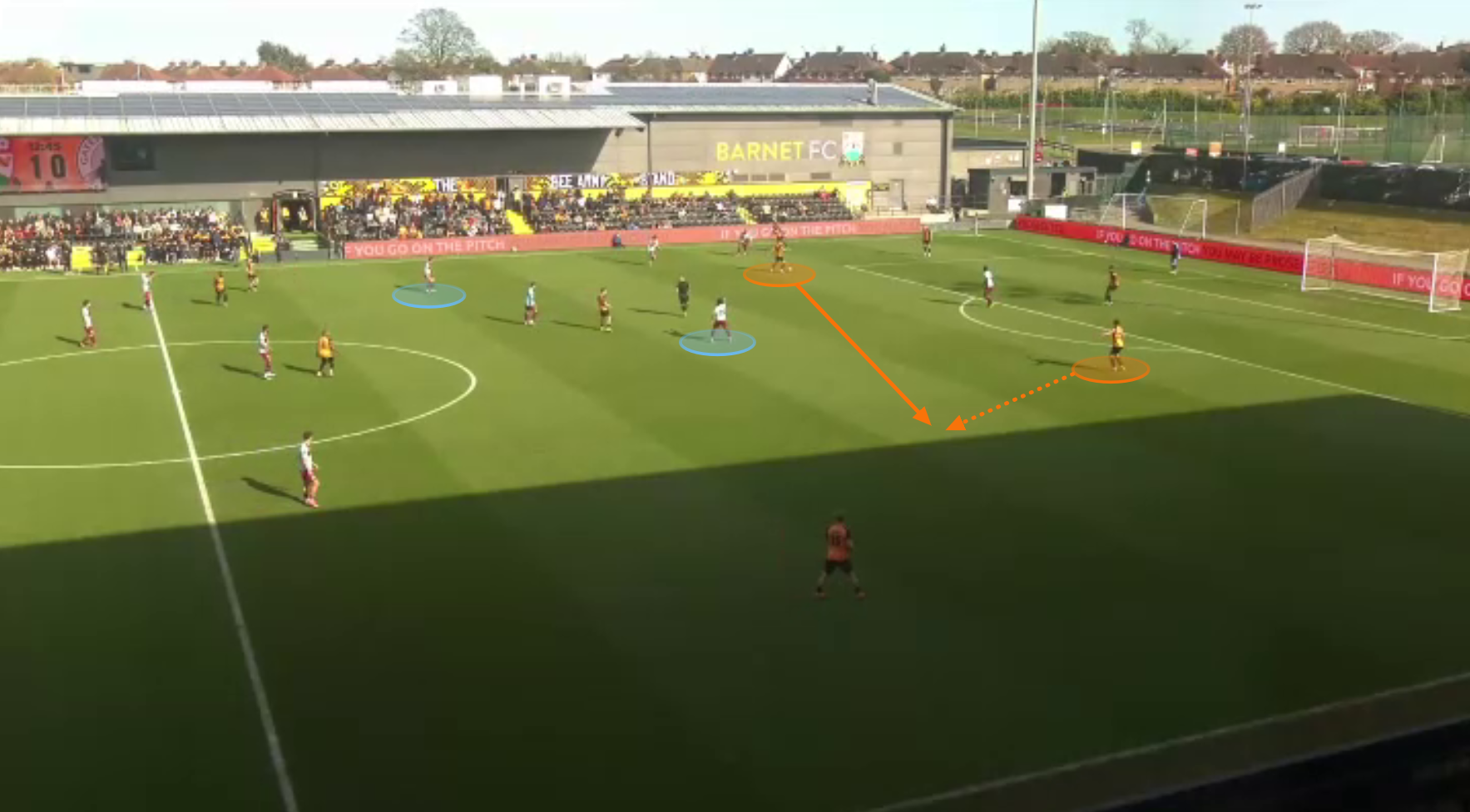
As a result, it allowed Barnet to find an overload in their build-up. Additionally, as Newton was positioned narrowly, he wasn’t in an optimal position to press Kenlock when the pass went out to him from one of Barnet’s #6’s, Anthony Hartigan.
Even when Gateshead did manage to press Barnet in man-to-man fashion, the home side had the players to stretch the play. For instance, if Kanu dropped deeper and took a Gateshead defender with him, Stead had the athleticism to make runs into the space that had been created in order to give Barnet an option to play ‘over’ Gateshead.
Stead is a very important player for Barnet in these instances. He has the physicality required to help Barnet get up the pitch and escape pressure, and is a one-man attack at times. His two goals in the match — Barnet’s second and third — were indicative of this.
For his first, Stead picked up a second-ball towards the right-side of the pitch and worked his way into a goalscoring position without any help. For his second, he received a pass in space on the left-side of the pitch with space to run into. Stead drove at Gateshead’s penalty area, took on two defenders and finished into the far corner.
That’s sixteen National League goals for the season now for Stead, as Dean Brennan’s side edge ever closer to the title.
 Shrimper Stats